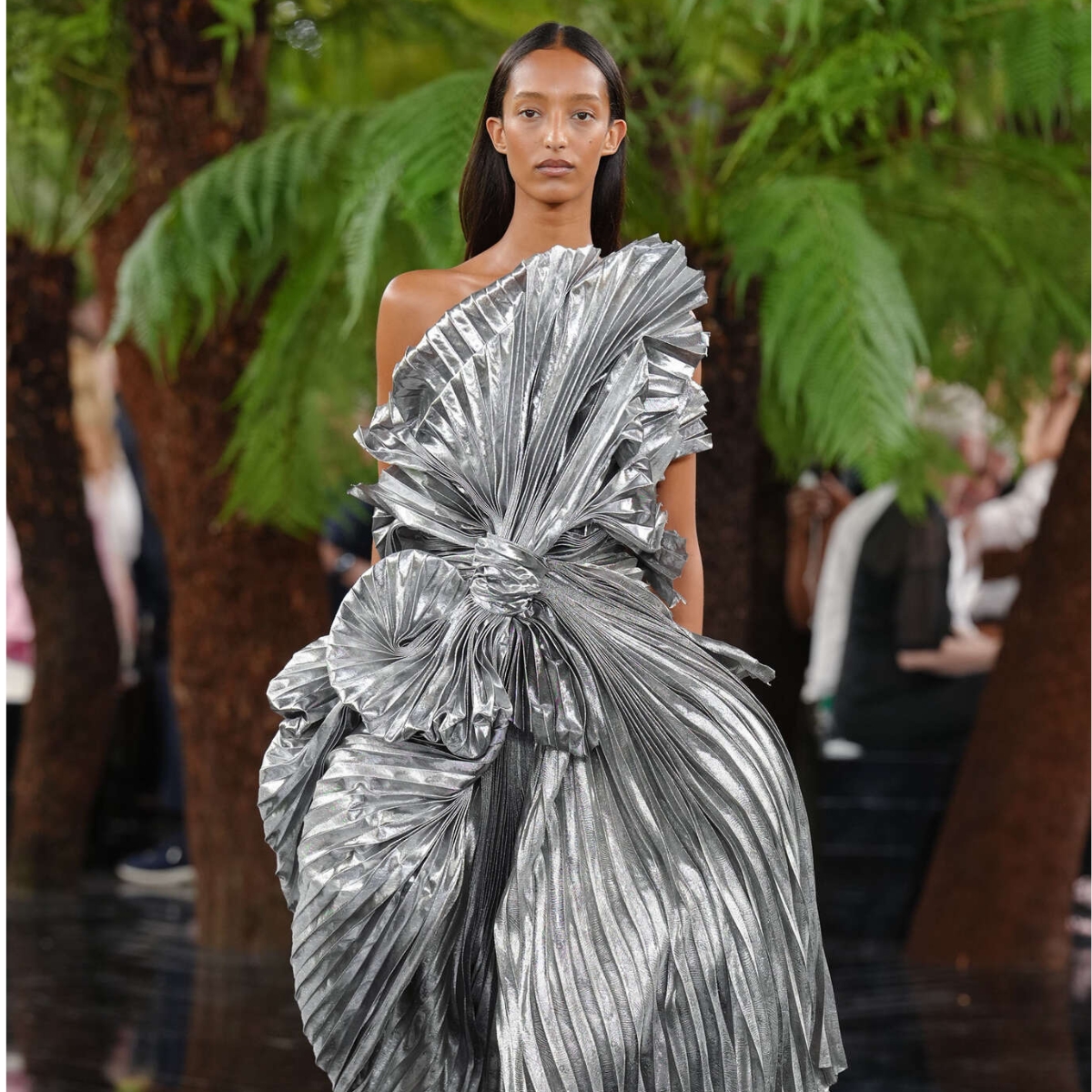
At Dior, history is never just history. It is a very elegant ghost sitting in the front row, wearing a Bar jacket, judging the proportions.
For his Dior Couture F/W26 collection, Jonathan Anderson did not try to outrun that ghost. He did something more interesting. He bent it.
Presented in Paris at the Musée Rodin, the collection arrived amid a cloud of very modern noise. Only days before, Anderson had been named as the designer behind Taylor Swift’s wedding dress, a fact that sent the internet into the kind of bridal speculation usually reserved for royal tiaras and secret pregnancies. And yet, on the runway, Dior did not feel like a footnote to celebrity culture. It felt like Anderson asking a better question: what happens when a house built on feminine architecture meets an artist obsessed with material, movement, and force?
The answer came through Lynda Benglis.
Dior Couture F/W26 And The Art Of Bending
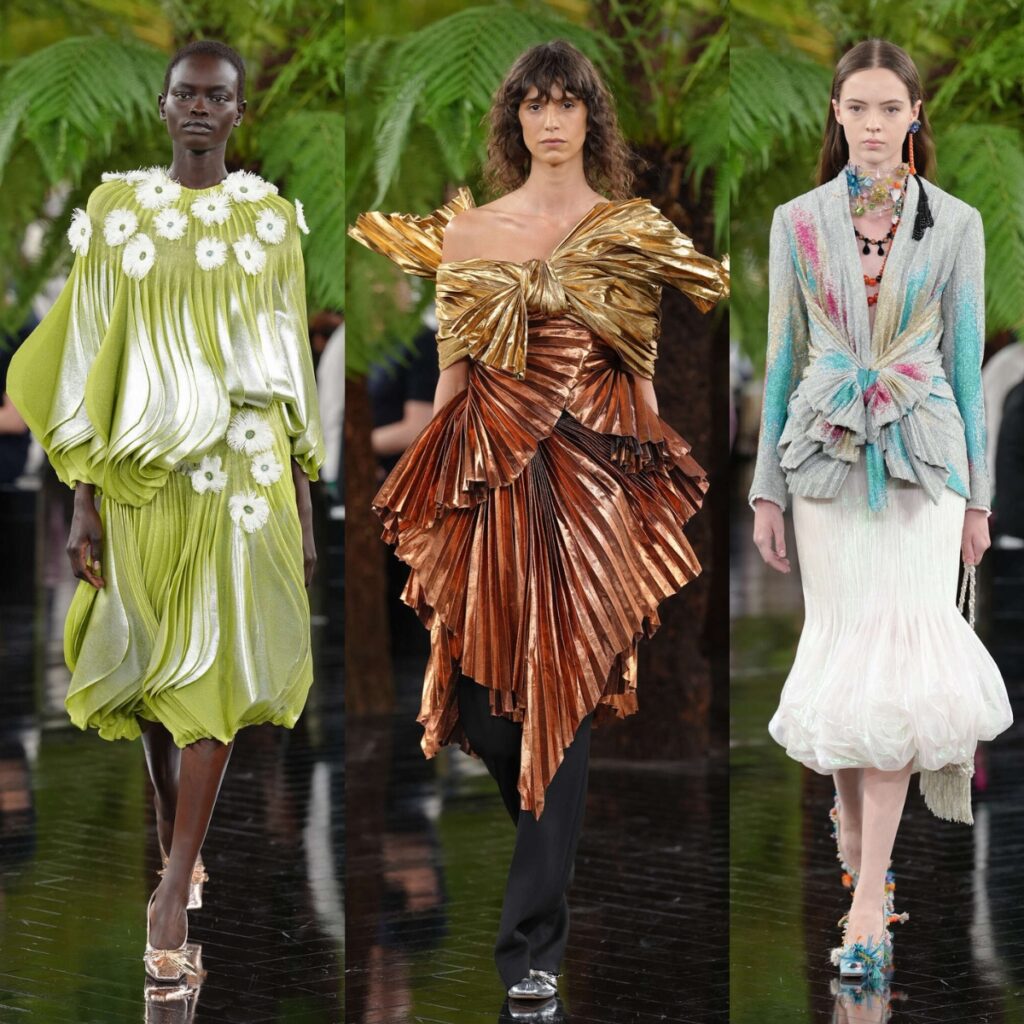
The collection was inspired by the American sculptor Lynda Benglis, known for poured forms, molten surfaces, and works that seem to resist neat behaviour. Her art does not sit politely. It spreads, folds, thickens, collapses, shines. It has body.
Some pleats looked less like technique and more like pressure. Silk satin gowns traced the body without begging for approval. Cocooning coats wrapped around the figure with the odd intimacy of something protective. The Bar jacket, Dior’s most famous piece of fashion grammar, appeared softened, disturbed, almost touched by weather — with fringe, ruffles, sheer layers and texture loosening its usual authority.
This matters because Dior is a house where femininity can easily become museum language. Beautiful, yes. Revered, of course. But sometimes trapped behind glass, like a woman expected to remain charming in a room where everyone else gets to be complicated.
Anderson seems interested in giving Dior complication again.
Why Jonathan Anderson’s Dior Feels Different
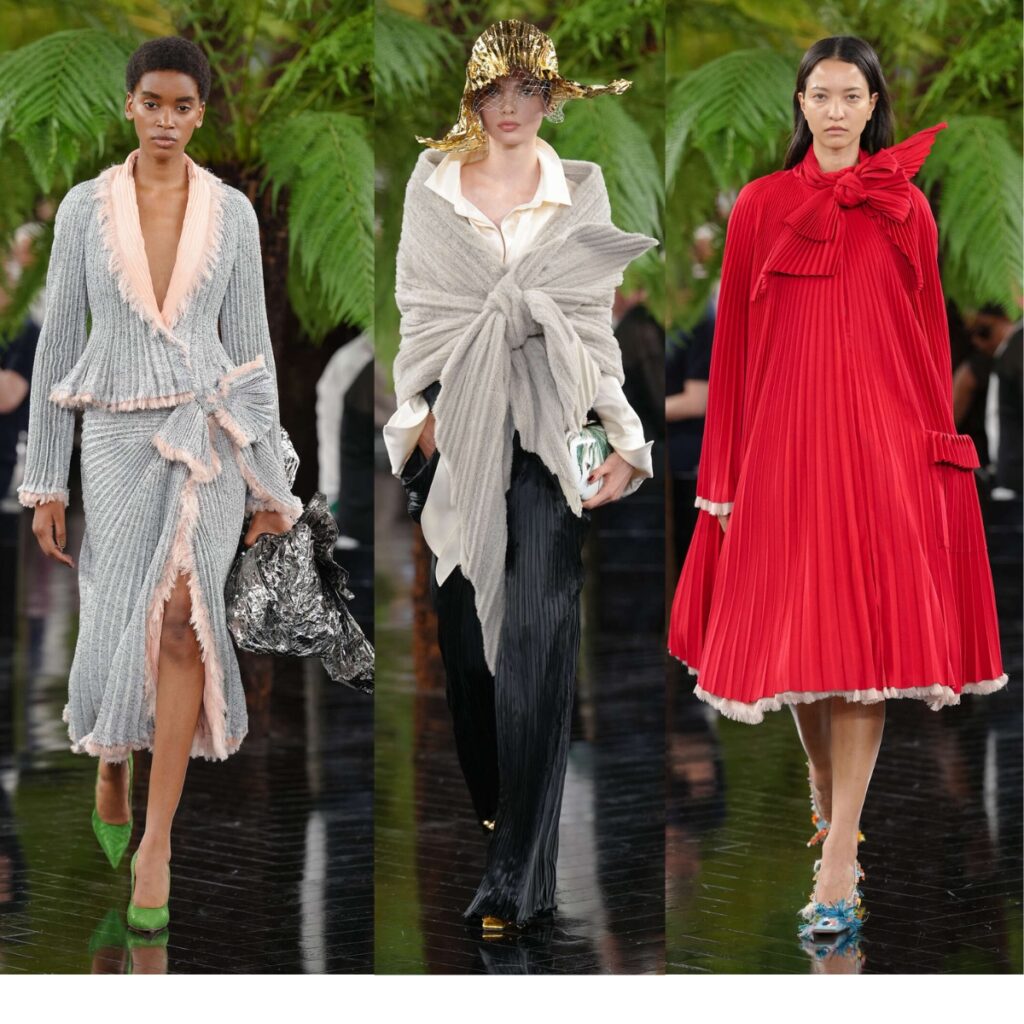
Jonathan Anderson is not a minimalist in the flat, showroom sense of the word. His work has always had a strange intelligence: part craft, part awkwardness, a cultural archaeology. At Loewe, he made luxury feel less like a handbag on a pedestal and more like a conversation between objects, hands, and memory.
At Dior, that instinct becomes more delicate, because the house comes with heavier furniture.
Christian Dior’s New Look was never only about clothes. It was about restoring shape after rupture, fantasy after austerity, waistlines after war. But in 2026, the challenge is different. Women are not asking fashion to restore their silhouettes. They are asking whether luxury can still have meaning.
This collection seemed to understand that question. The rarefied air of couture was there — sweeping lines, soft embellishment, the inevitable bridal ending. And the best looks carried that almost magical couture balance: made by hand, without being suffocated by perfection.
The Bar Jacket, Reconsidered
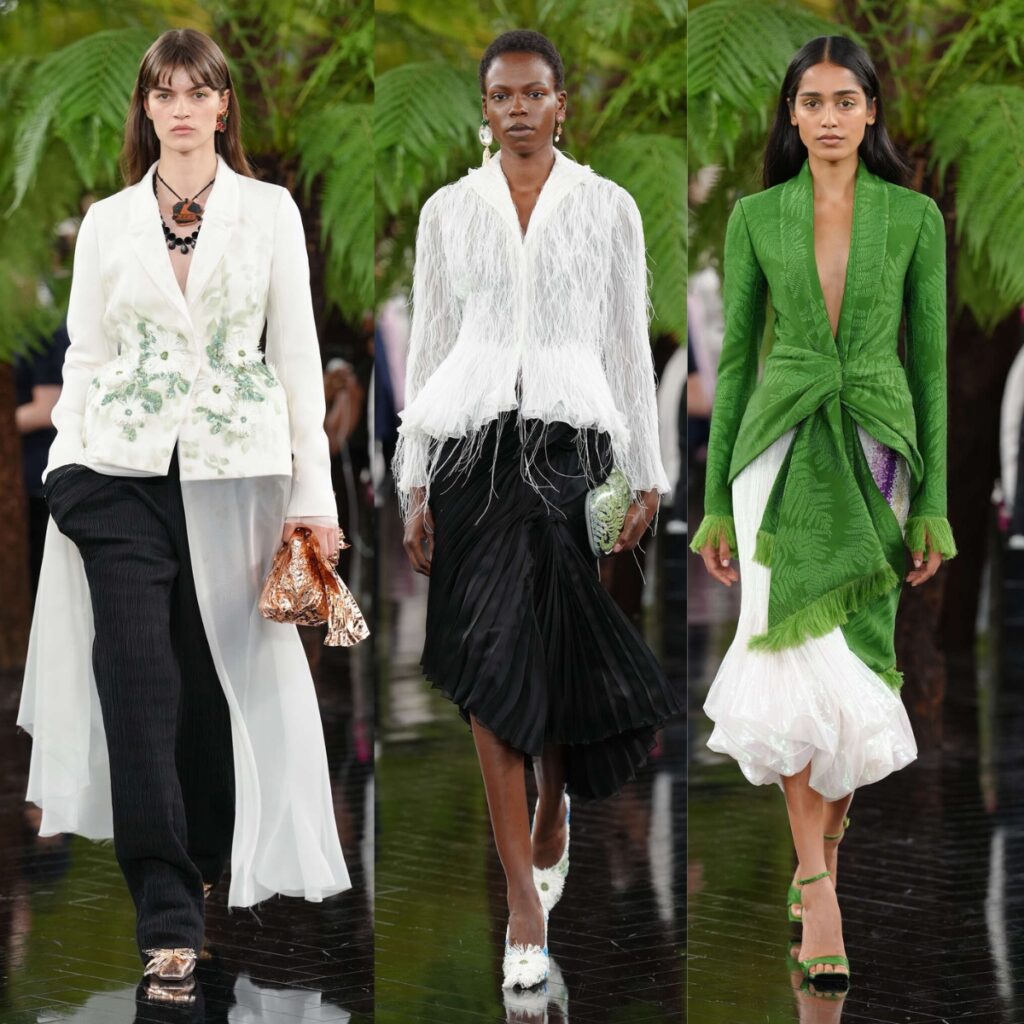
Every Dior designer must eventually face the Bar jacket. It is the house’s family portrait, tax document, and holy relic. Touch it too little, and you look timid. Touch it too much, and everyone starts clutching their pearls.
Anderson’s version did not scream reinvention. Thank God. Fashion has exhausted the word.
Instead, he allowed the jacket to lose some of its posture. The historic hourglass line remained, but it was interrupted by tactile details: leaf-green fringe, gentle ruffles, sheer movements, surfaces that suggested nature rather than control.
This is where the Lynda Benglis reference worked best. The collection was not “art-inspired” in the lazy sense. It did not paste sculpture onto dresses like a moodboard. It absorbed the idea of matter refusing obedience.
For a maison so associated with polish, that refusal felt useful.
Couture In The Age Of The Screenshot
Couture today has a strange job. It must justify thousands of hours of handwork to a world that consumes beauty in half a second. It must be photographed, posted, discussed, misread, adored, mocked, turned into a carousel, and forgotten by lunch.
And yet, couture still has one advantage over the algorithm: time.
A pleat cannot be rushed. Embroidery cannot be faked into existence. A coat that holds the body properly requires someone to understand weight, balance, and patience. In that sense, Dior Couture F/W26 was a reminder that luxury is not only about exclusivity. It is about duration.
Perhaps this is why the collection felt stronger when it leaned into touch: satin, chiffon, fringe, folds, sculptural handbags, floral embroidery, mesh heels, pieces that asked to be seen slowly. Not everything was equally convincing. Some accessories risked becoming too literal, as couture accessories often do, when the runway begins to resemble a very expensive garden party. But the general direction was clear: Anderson wants Dior to feel handmade, not embalmed.
The Taylor Swift Shadow
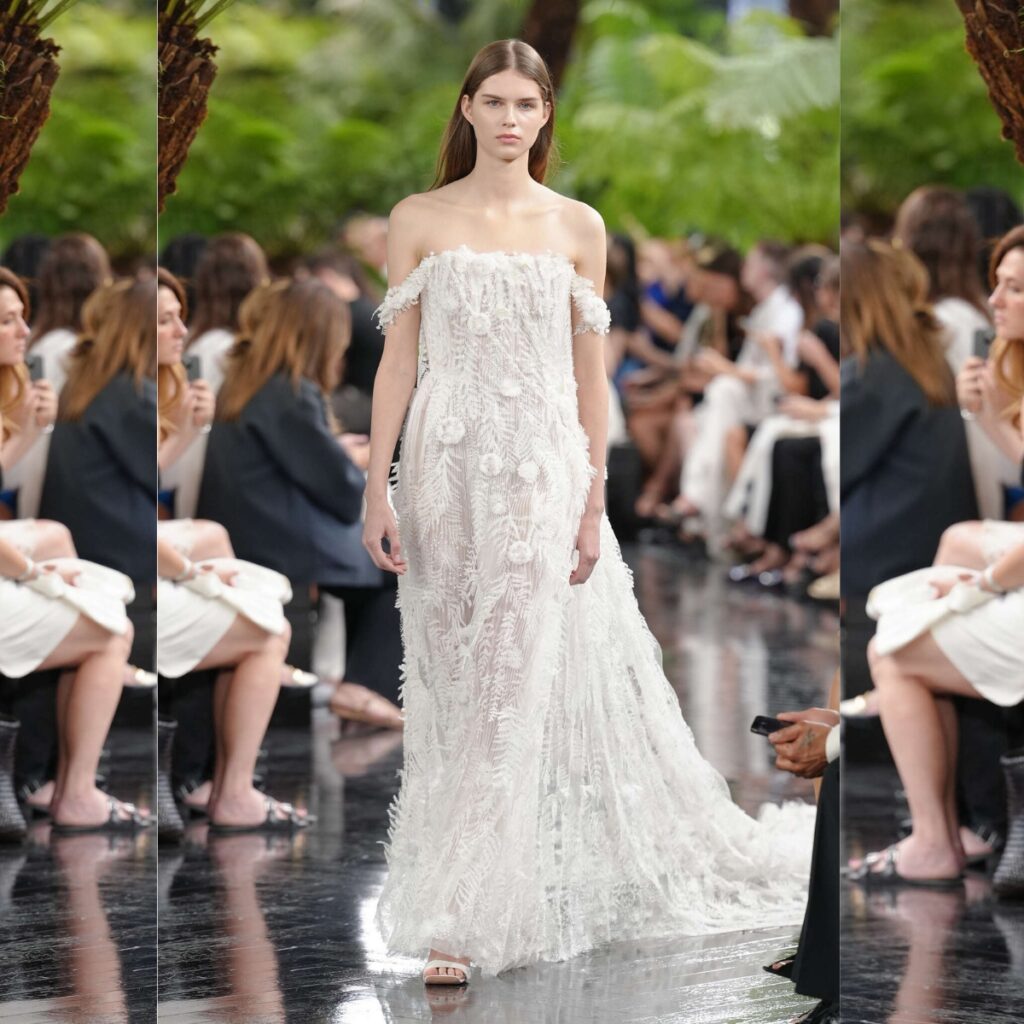
Of course, the Taylor Swift wedding dress hovered over the show. It would have been impossible not to. A hidden couture gown designed by Dior’s new creative director is exactly the sort of cultural bait the internet was born to swallow whole.
But Anderson was clever not to feed the beast too generously.
The show closed with a bridal look, as couture traditionally does, but it did not feel like a desperate wink to fans. It felt more like Dior doing what Dior does: offering a fantasy of womanhood that is part ceremony, part theatre, part impossible dry-cleaning problem.
Still, the timing gave the collection a useful charge. Celebrity brought the crowd to the door. Sculpture kept the conversation in the room.
What This Dior Collection Says About Femininity Now
The most interesting thing about Anderson’s Dior Couture F/W26 is that it did not treat femininity as softness alone.
There was softness, certainly. But also weight. Structure. Oddness. A sense that beauty can be graceful without being obedient.
This is important because fashion still has a habit of flattening women into eras: romantic woman, powerful woman, sensual woman, intellectual woman. As if a woman must choose one costume and behave accordingly.
Anderson’s Dior suggested something more adult. Femininity can be sculptural. It can be tender and stubborn. It can wear lace and still refuse simplification. It can be decorative without becoming passive.
That may be the most modern thing about this collection.
Not the celebrity proximity. Not the museum setting. Not even the art reference.
But the idea that a historic house can honour beauty without asking women to become porcelain.
Dior, But With A Pulse
Jonathan Anderson’s Dior is still at the beginning of its story. One couture collection does not settle the matter, and fashion is very good at confusing a promising entrance with a full philosophy.
But this was a persuasive beginning.
Dior Couture F/W26 did not throw away the house codes, nor did it polish them into irrelevance. It pressed into them. It bent the silhouette, disturbed the surface, and let a little human irregularity enter the room.
For a maison built on shape, that feels like the right place to start.
Images courtesy @Dior