If you are reading this article, we already know something about you: even if you love paper — the smell, the weight, the frankly unnecessary pleasure of turning a glossy page — you probably buy far fewer magazines than your mother did. So do we.
Print magazines never really recovered from the digital revolution. We stopped waiting for a monthly issue to tell us what was happening in fashion because, by the time it reached the newsstand, we had already seen the collection on Instagram, watched the backstage video on TikTok and perhaps bought the shoes. And you notice this change most around September.
Once upon a time, the arrival of the September Issue was an event. Who would Vogue put on the cover? How thick would the magazine be? Which designers had bought the opening spreads? What had Grace Coddington done this time?
Today, August arrives and many of us realise we haven’t even wondered who will be on Vogue’s September cover. So, has the September Issue become a beautifully bound relic? Or is its survival proof that fashion magazines still have something the algorithm cannot quite reproduce?
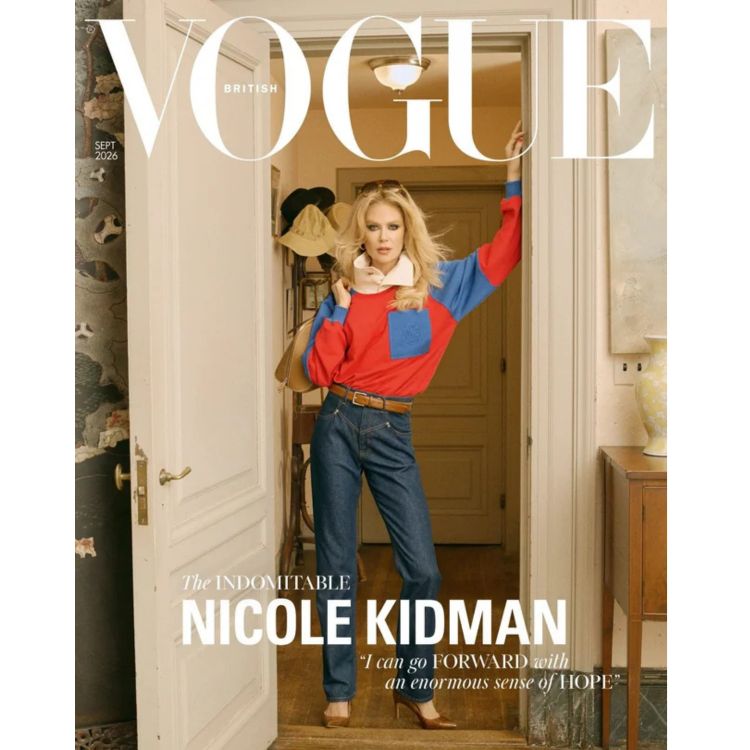
Nicole Kidman, Photographed by Venetia Scott
What Is the September Issue?
September has traditionally been fashion’s unofficial New Year.
Autumn/Winter collections arrive in shops, summer clothes retreat to the back of the wardrobe, fashion weeks begin again and advertisers suddenly have rather a lot of coats, handbags, perfumes and boots they would like us to know about.
For decades, fashion magazines responded by producing their biggest and most commercially important editions of the year. And when we say big, we mean furniture-moving big.
The September 2007 American Vogue ran to 840 pages, 727 of them advertising. It weighed more than four pounds and became the subject of R.J. Cutler’s documentary The September Issue, starring Anna Wintour, Grace Coddington and the particular kind of office tension that made an entire generation briefly believe magazine publishing was as dramatic as cardiac surgery.
Vogue went even further in 2012. Its Lady Gaga September edition reached 916 pages, then the largest issue in the magazine’s history.
The size mattered because advertising mattered. A fat Vogue meant luxury houses were spending. Fashion was selling. The magazine sat comfortably in the middle of a rather profitable marriage between designers, advertisers, editors and readers. You could almost measure the confidence of the luxury industry with a ruler. That world has changed.
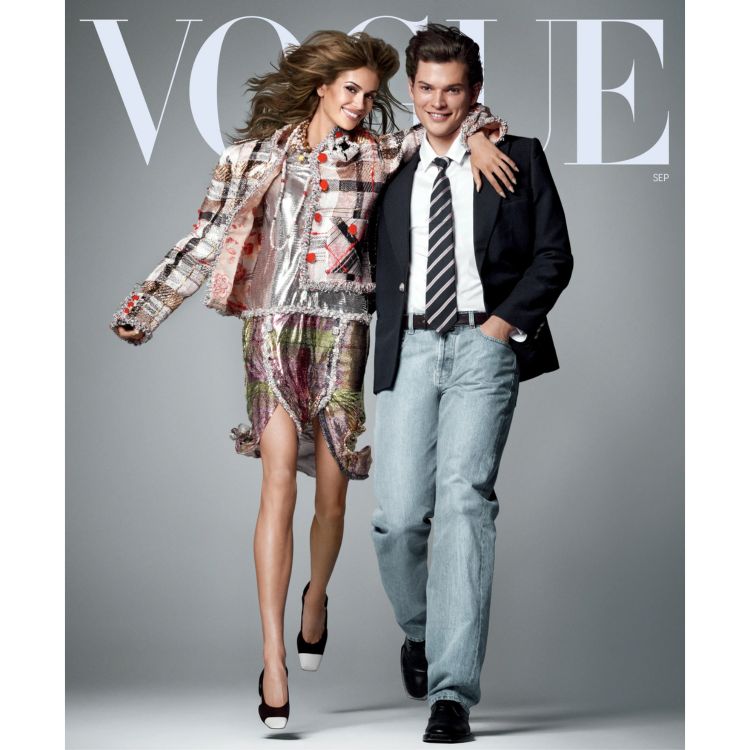
Kaia Gerber and Homer Gere, Photographed by Steven Meisel
The September Issue 2026: Kaia Gerber, Homer Gere and a Very Convenient Family Album
Which brings us to Vogue’s September Issue 2026.
For her first September edition as Vogue US’s Head of Editorial Content, Chloe Malle chose Kaia Gerber and Homer Gere, photographed by Steven Meisel and dressed in Chanel. The casting has a deliciously complicated backstory. Kaia is Cindy Crawford’s daughter. Homer is Richard Gere’s son with actress Carey Lowell. And Cindy Crawford and Richard Gere were once married.
In November 1992, Crawford and Gere appeared together on the cover of American Vogue, photographed by Herb Ritts. Thirty-four years later, their respective children are now sharing Vogue real estate while promoting Ryan Murphy’s new television adaptation of Bret Easton Ellis’s The Shards.
Fashion loves an archive reference almost as much as Hollywood loves intellectual property, so naturally Vogue couldn’t resist. It is clever, almost comically convenient. Parents: famous. Children: famous. Parents: Vogue cover. Children: Vogue cover. Parents: once married. Children: now starring together in a television series. One imagines the pitch meeting lasted approximately four minutes.
Is This Vogue’s Nepo-Baby Issue?
The internet was less enchanted.
The cover immediately attracted criticism for being bland, excessively retouched and, above all, another celebration of nepo babies. The cover line describing Gerber and Gere as young people “making their own way” proved especially irresistible to commenters. Even Vogue’s own interview acknowledges the problem.
Gerber is unusually straightforward about it. She tells Vogue that she has only ever been a nepo baby and has benefited professionally from that fact. She also understands that this means audiences expect her to prove she deserves the opportunities she receives. Fair enough.
Being born to Cindy Crawford doesn’t automatically make you untalented, just as being born to an accountant does not automatically make you good with Excel. But the criticism points to something larger than Kaia Gerber or Homer Gere.
For decades, Vogue was supposed to tell us who mattered next. This cover instead tells us who mattered before — and introduces us to their children. That distinction is worth noticing.
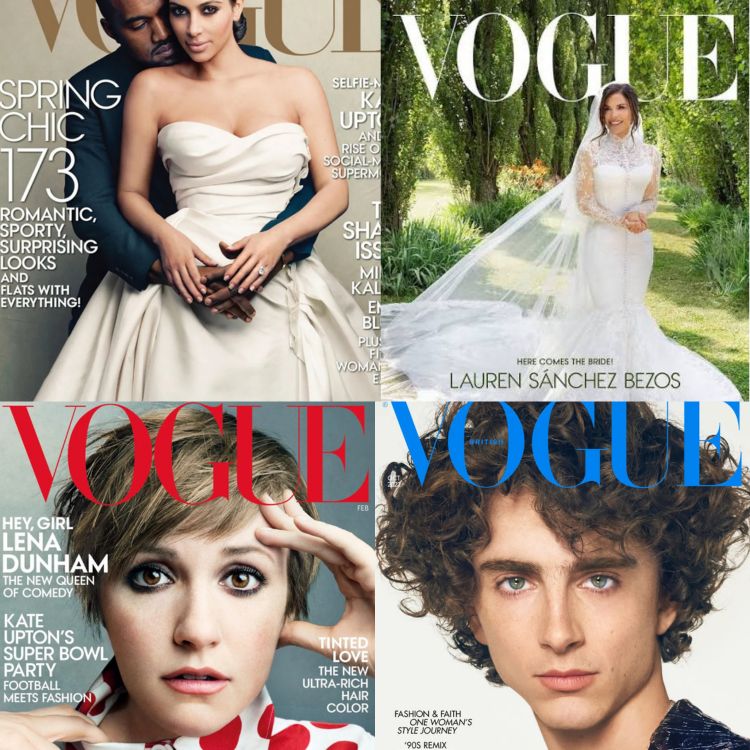
Kim Kardashiam by Annie Leibovitz, Laura Bezos by Tierney Gearon, Lena Dunham by Annie Leibovitz, Thimothée Chalamet by Steven Meisel
Vogue and the Exhausting Business of Being Relevant
Vogue has been negotiating this problem for years.
The magazine once had enough authority to make someone culturally important simply by placing her on the cover. Increasingly, it has had to select people who are already commanding enormous attention elsewhere.
Remember the uproar when Kim Kardashian and Kanye West appeared on Vogue’s April 2014 cover? At the time, some readers saw Kardashian’s arrival as proof that the gates of high fashion had collapsed. Reality television had entered the temple.
Although Kim Kardashian undeniably established herself as a force within the fashion industry, the image she came to embody raises a more uncomfortable question — one Vogue has often preferred not to examine too closely. Her rise coincided with an era of hyper-sexualised femininity, extreme body scrutiny and the transformation of the female body into a highly edited, highly monetised object of consumption. Vogue was very good at celebrating the spectacle, rather less interested in asking what that spectacle did to women’s self-perception. The contradiction is familiar: fashion speaks fluently about empowerment while continuing to sell women an exhausting ideal of desirability — until the next body, the next face and the next cover replaces it.
Vogue’s lavish 2023 profile of Lauren Sánchez, photographed by Annie Leibovitz on Jeff Bezos’s enormous West Texas property, blurred fashion, wealth and access in ways that made the old question inevitable: are magazines observing powerful people or simply enjoying being invited into their houses?
And then there is perhaps Vogue’s most uncomfortable editorial misjudgement. In 2011 the magazine published Joan Juliet Buck’s extraordinarily flattering profile of Syrian first lady Asma al-Assad, titled A Rose in the Desert. It was not a cover story, as it is sometimes remembered, but its soft-focus portrayal of the Assad family became infamous as the Syrian government’s violent repression unfolded. Vogue later removed the article from its website.
These examples are very different and shouldn’t be thrown into the same moral handbag. But together they reveal the difficult relationship Vogue has always had with relevance. Fashion magazines want proximity to power, fame and beauty. The danger begins when proximity is mistaken for judgement.
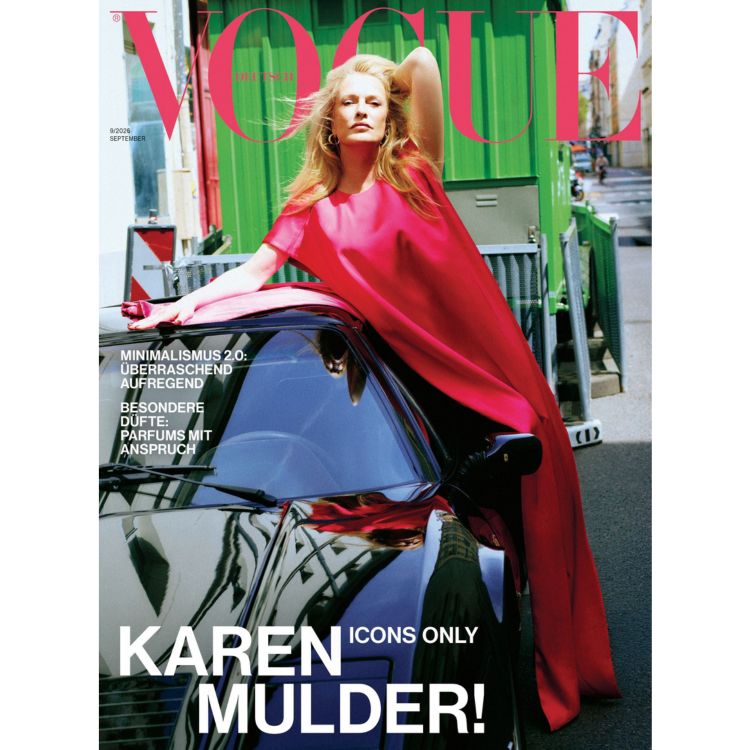
Model Karen Mulder, Photographed by Sean and Seng
Print vs Digital vs AI: Now Things Become Really Interesting
The September Issue’s biggest problem, however, is not Kaia Gerber. It is your phone. Fashion magazines first lost their monopoly on speed.
Runway photographs that once took weeks to reach readers now arrive seconds after a model walks onto the catwalk. Designers communicate directly with customers. Celebrities publish their own photographs. Stylists have Substacks. Editors have Instagram accounts. And someone on TikTok has usually identified the shoes before the fashion assistant has finished writing down the credits.
Print responded by becoming less frequent and more luxurious. Vogue US itself moved to eight print issues a year in 2026, explicitly describing its new strategy as fewer, larger, more premium magazines designed to feel collectible. Chloe Malle has said she wants print to possess “weight and import”.
In other words, Vogue is no longer trying to make paper compete with the internet. That would be like entering your grandmother in the 100-metre sprint. It is trying to make paper something the internet isn’t. Tactile. Edited. Finite. Desirable enough to keep. And perhaps that is where the September Issue still has a future.
But AI Has Changed the Question Again
Digital publishing spent twenty years learning how to please Google. Now Google itself increasingly answers the question.
The Reuters Institute’s 2026 Digital News Report found that organic Google search traffic to more than 2,500 publisher sites fell by roughly a third between November 2024 and November 2025. Publishers surveyed expect search traffic to fall substantially further over the coming years.
Chartbeat found the impact particularly severe among smaller publishers: Google Search referrals dropped considerably faster for small and medium-sized sites than for the largest publishers. AI referrals are growing, but still represent less than 1% of page views across its network.
That matters enormously for independent magazines. For twenty years the internet rewarded publishers for producing endless searchable information:
What shoes are trending?
What should I wear this autumn?
Who designed Kaia Gerber’s dress?
AI can answer those questions perfectly well. What it cannot easily replace is the reason you choose to read one particular magazine’s interpretation of what those things mean. This may sound paradoxical, but AI could make editorial personality more valuable, not less.
Information is becoming cheap. Point of view is not.
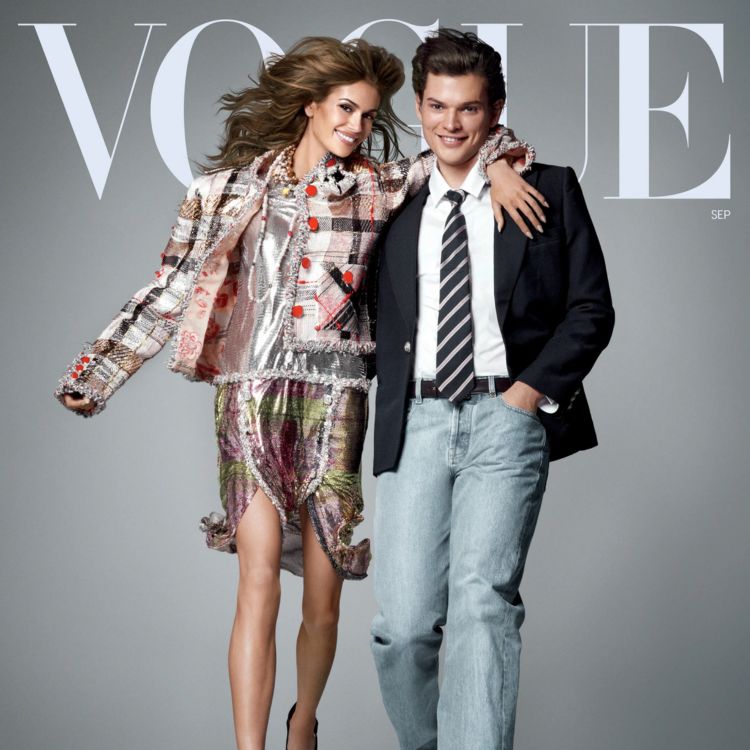
Kaia Gerber and Homer Gere, Photographed by Steven Meisel
So, Are September Issues Still Important?
Yes. Just not in the way they once were.
The September Issue no longer arrives like Moses carrying fashion’s commandments down from Condé Nast headquarters. We don’t need Vogue to tell us what happened on the runway. We have already seen it. Its value now lies elsewhere.
A September cover tells us who an editor believes deserves cultural attention. The stories chosen tell us what a publication considers worth preserving once the daily digital noise has disappeared. That makes the Kaia Gerber and Homer Gere cover rather revealing.
Vogue looked at 2026 and chose lineage, celebrity, nostalgia and Hollywood promotion wrapped in an exquisite Steven Meisel photograph. Perhaps readers criticising the cover are therefore proving that the September Issue still matters. Nobody becomes irritated by an institution whose judgement they consider completely irrelevant. And Vogue itself seems to understand that print’s future will not be about producing more paper. It will be about making the paper feel worthy of keeping.
The old September Issue measured importance by the number of pages it contained. The next one will have to measure it by something far more difficult: how many of those pages we still remember when October arrives.