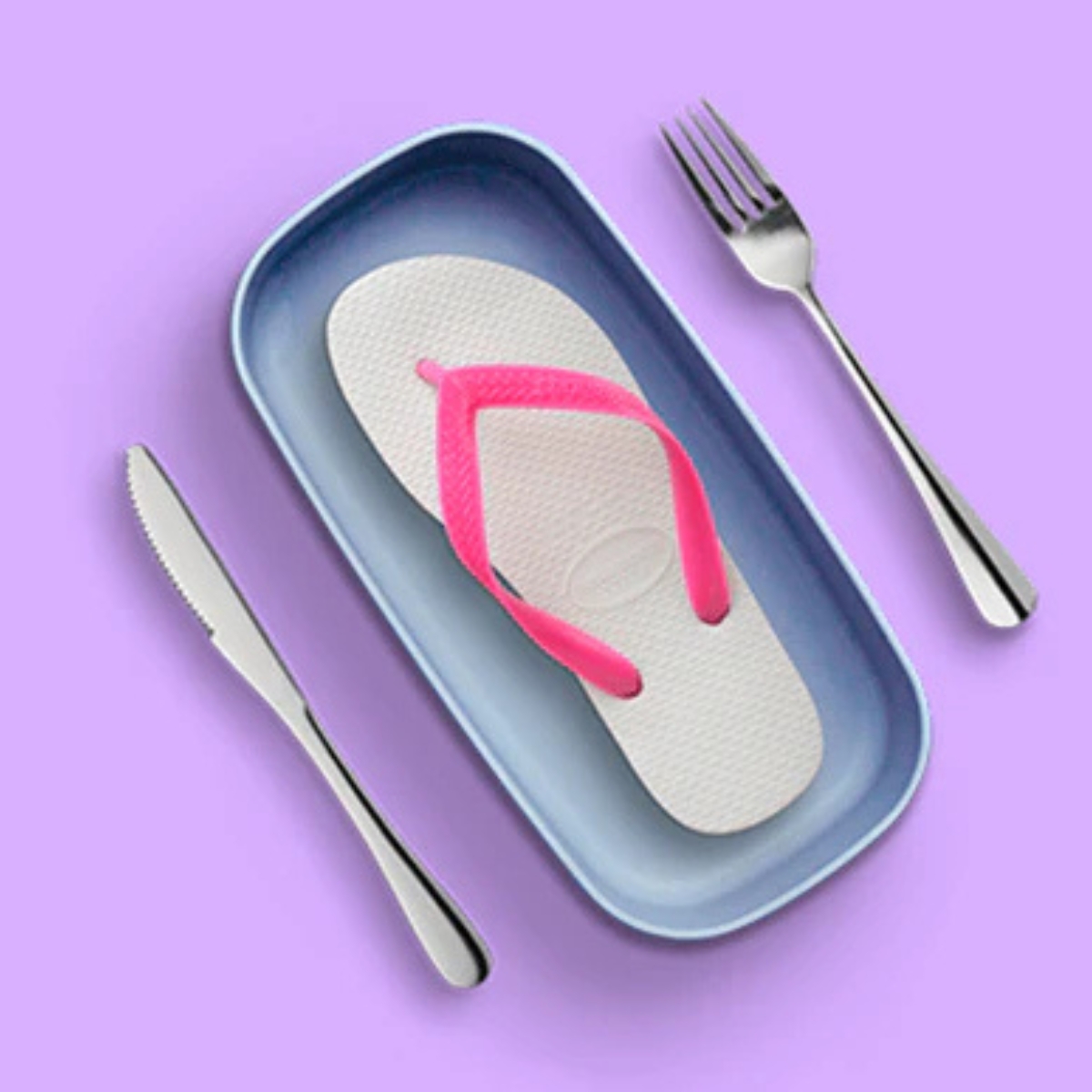
The flip-flop was never supposed to be elegant. It was too flat, too rubbery, too practical, too close to real life. And yet, here we are: in 2026, a red Havaianas x Zara pair is becoming the small summer object everyone suddenly understands.
The return did not happen overnight. In 2023, at Dior’s Fall show in Mumbai, Maria Grazia Chiuri sent models down the runway in black flat sandals, grounding embroidered skirts, Nehru-collar shirts and Indian textile references with a kind of deliberate simplicity. Dior described the collection as a tribute to Indian textile traditions and ancestral artisanship, staged at the Gateway of India in Mumbai.
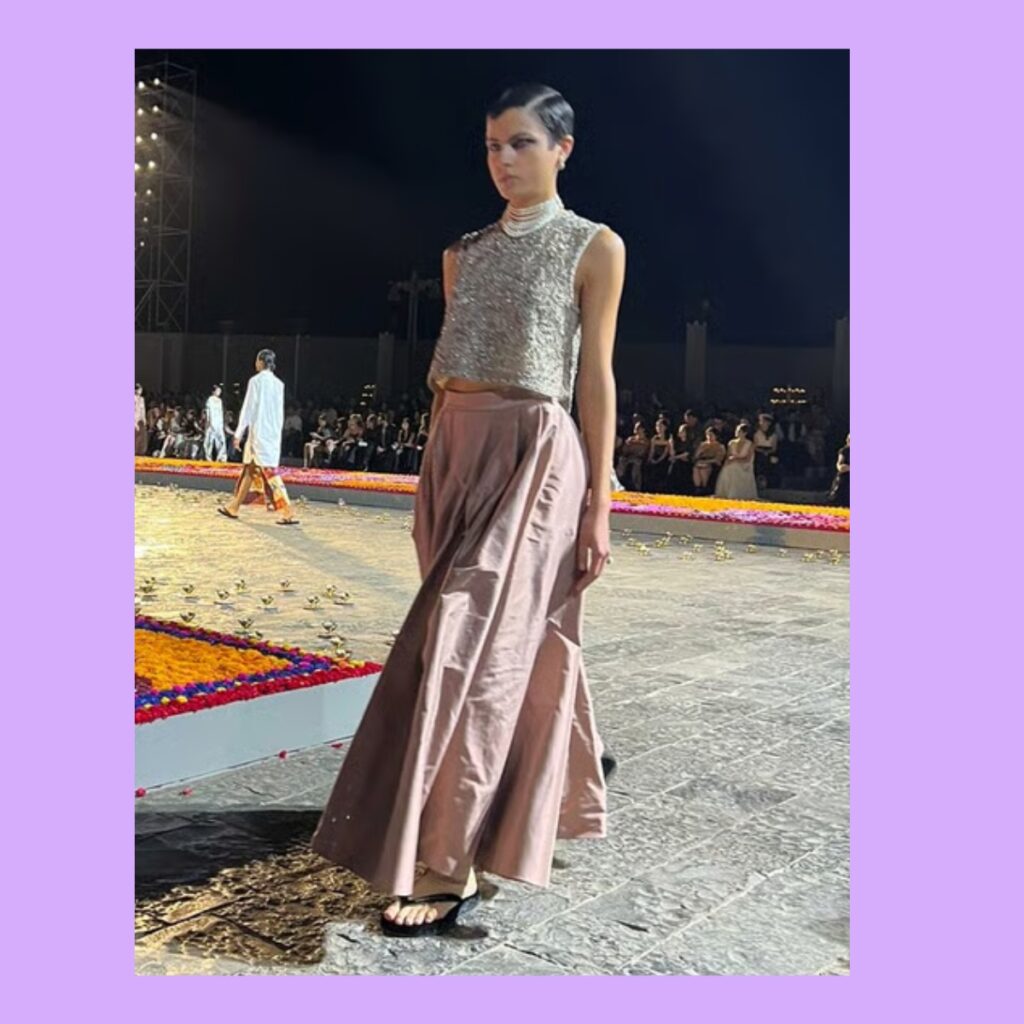
That image mattered: luxury, craft and humility walking together. After that, the rubber sandal no longer looked like something you wore because you had given up. It looked like the detail that made an outfit exhale.
But for Brazilians, Havaianas were never a trend. They were part of daily life. So how did a rubber sandal once associated with working-class Brazil become a global fashion object?
From Everyday Brazil To The World
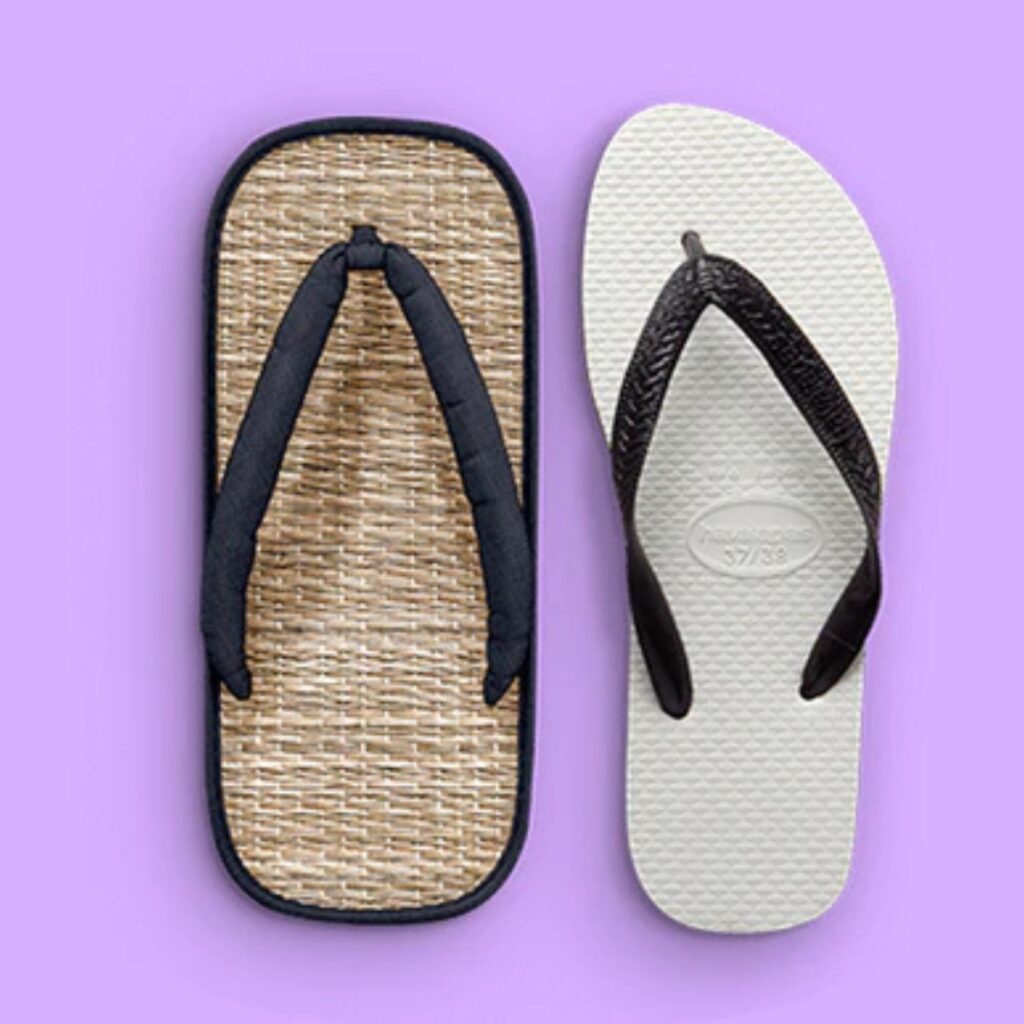
Havaianas and Japanese zori sandal
Havaianas were created in Brazil in 1962, inspired by the Japanese zori sandal. The first model had a rubber sole and a rice-grain texture, a detail that remains part of the brand’s identity today.
The important point is this: Havaianas did not begin as fashion. They began as something useful. A sandal for heat, beach days, markets, football afternoons, tiled kitchens and ordinary life. They were cheap, washable and almost indestructible.
By the 1980s, Havaianas were so essential in Brazil that they were included in a list of basic goods with controlled prices during inflation. That says more about the brand than any luxury campaign could. They were not an accessory to Brazilian culture. They were part of its rhythm.
When A Mistake Became Style
Originally, Havaianas were white and blue. In 1969, a production mistake created pairs with green straps. Brazilians liked them, and more colours followed.
Later, in the 1990s, surfers began turning the soles over to show the coloured side. Havaianas noticed and launched the Top model in 1994, turning a practical sandal into a more stylish, monochrome object.
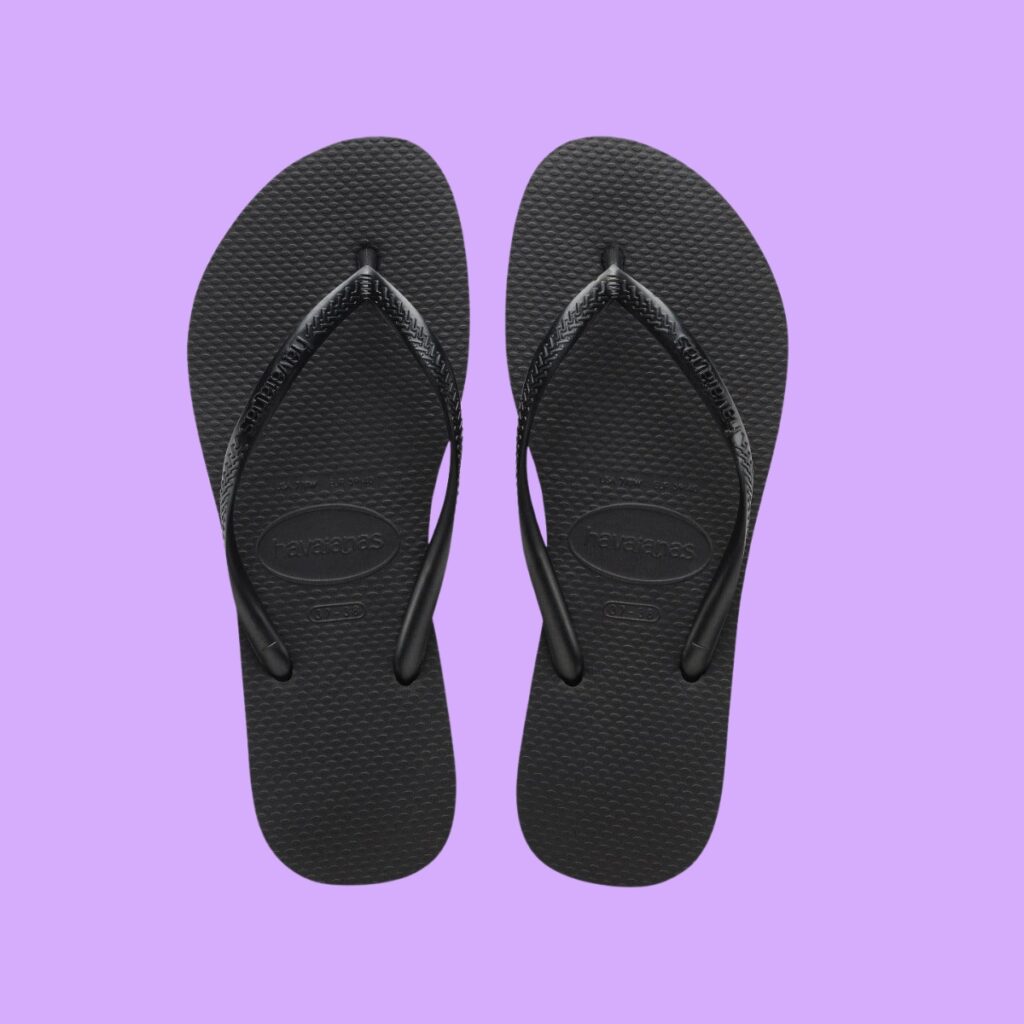
The black version is inspired by how the surfers turned Havaianas’ soles over to show the coloured side.
From there, the flip-flop moved slowly from necessity to identity. It still looked humble, but now it had colour, attitude and cultural memory.
Why Fashion Keeps Returning To Havaianas
Fashion loves the flip-flop because it disturbs the hierarchy of dressing. A rubber sandal refuses the performance of luxury. It does not need polishing, protecting or explaining. It belongs to the beach, the pavement, the supermarket, the hotel breakfast and the summer evening when nobody wants to suffer for a look.
That ease has become seductive.
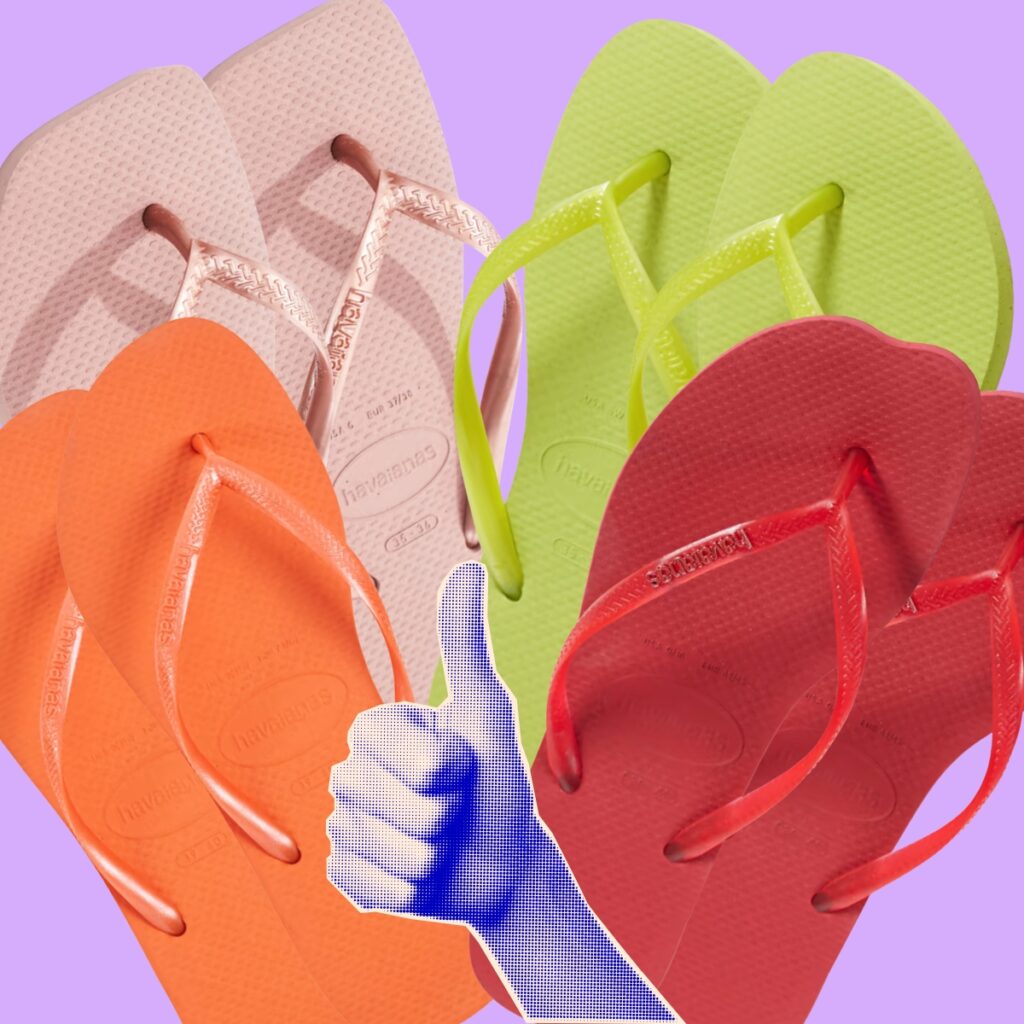
Red Havaianas by Asos. Orange, pink and green are strong colours this summer too.
Havaianas work because they bring fashion back to earth. Wear them with linen trousers, a white cotton dress, tailored shorts or a long skirt, and suddenly the outfit feels less controlled. More human. Less desperate to impress.
The Zara Collaboration And The New Summer Uniform
The Havaianas x Zara collaboration makes sense because both brands understand desire at scale. Zara knows how to translate a mood quickly. Havaianas knows how to make a simple object feel emotionally familiar.
The red flip-flop is not interesting because it is complicated. It is interesting because it is basic, bright and almost stubbornly unpretentious. It adds colour without asking for effort.
And still, there is a small irony here. A sandal born of ordinary Brazilian life becomes desirable in Europe because fashion is always seeking authenticity. The industry often travels a very long road to arrive at what people were already wearing because it worked.
The Real Luxury Is Ease
The Havaianas fashion history is not only about a sandal becoming chic. It is about how useful objects can carry more truth than designed status symbols.
Havaianas became global because they carried a lived-in meaning. They came from a country where the sandal was not a seasonal trick, but a companion.
Sometimes style does not begin in ateliers or moodboards. Sometimes it begins with a rubber sole, a hot pavement and the quiet confidence of not trying too hard.
Images ©Havaianas, ©asos