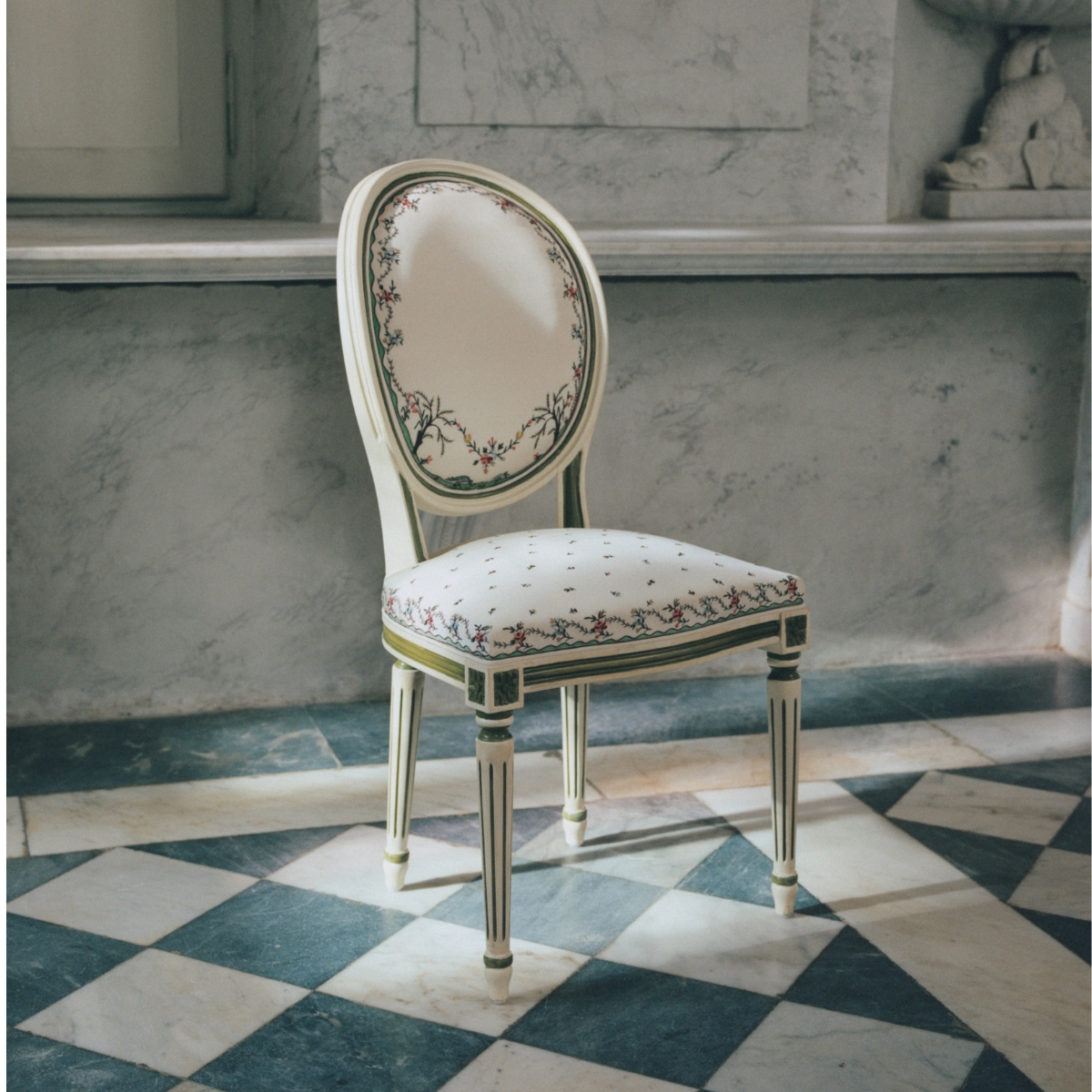
Jonathan Anderson has just given Dior’s historic Medallion Chair a new chapter. And, voilà, the Dior Medallion Chair is suddenly more interesting than another sculptural shoe, trophy bag, or another red carpet dress trying to look like architecture with Wi-Fi.
This is not because we suddenly want to replace our wardrobes with furniture. Although, frankly, some wardrobes could benefit from a proper chair and a moment of reflection. It is because the Medallion Chair is not merely decorative. At Dior, it has always been a small throne of meaning: a place to sit, to observe, to be seen, and to understand that luxury is often built from rituals rather than noise.
Jonathan Anderson seems to understand this. His Dior is not treating history as a museum label, but as a language. And the Medallion Chair may become one of the clearest sentences in that language.
How The Medallion Chair Became A Dior Symbol
Before it became a fashion motif, the medallion chair belonged to the grammar of French refinement. The oval-backed chair is associated with the Louis XVI style, a period that favoured symmetry, carved wood, restraint, and an aristocratic order that still haunts Parisian interiors like perfume on a silk scarf.
The chair was created by cabinetmaker Louis Delanois in 1769 and is defined by its oval back and carved wooden structure. Christian Dior, who admired the Louis XVI style, chose this kind of chair from the earliest days of his Maison.
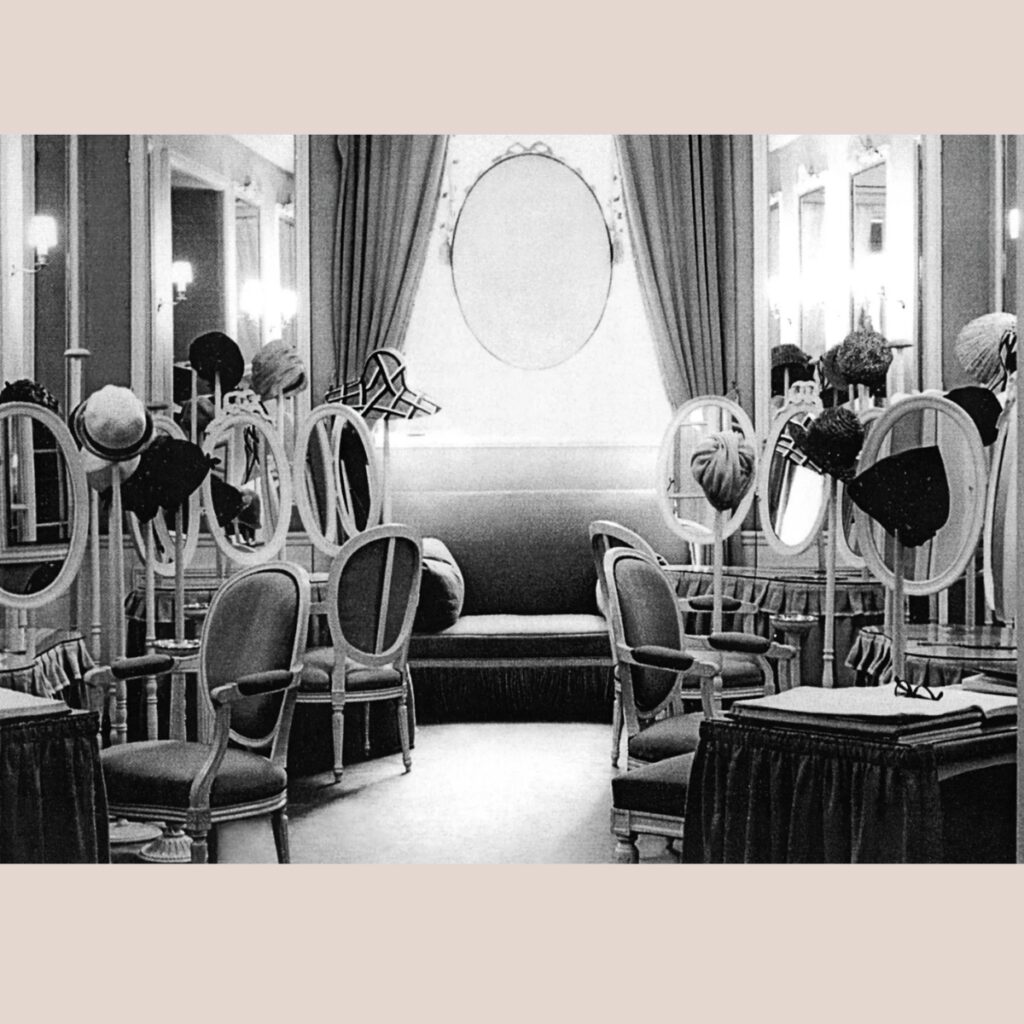
Dior’s original Medallion chairs at the brand’s Millinery Salon, circa 1960. Photo: Courtesy of Dior
In 1947, one year after launching his couture house, Christian Dior opened Colifichets, a small boutique on the ground floor of 30 Avenue Montaigne. La Galerie Dior describes Colifichets as a boutique initially dedicated to “trinkets” such as jewellery, flowers, scarves, and other refined accessories. The space was decorated with Toile de Jouy by Christian Bérard and became an early expression of Dior’s complete universe, not just its clothes.
That detail matters. Dior was never only about dresses. From the beginning, it was about atmosphere. The chair, the flowers, the boxes, the bow, the staircase, the grey, the salon, the pause before a woman tried on a jacket. Luxury was not an object. It was a choreography.
The Medallion Chair soon became part of the Dior visual memory. It seated clients and guests, appeared in the maison’s interiors, and returned again and again as a sign of French elegance with a slightly theatrical wink. Not Versailles as costume drama, but Versailles after editing.
The New Dior Medallion Chair By Jonathan Anderson
Jonathan Anderson’s new interpretation of the Dior Medallion Chair continues this conversation between furniture and fashion. Anderson revisits the historic chair in two versions. One is covered in moiré fabric in elegant tones. The other is embroidered with the romantic flower motif, creating a soft, bucolic effect.
Both versions are made in beech wood, carved in the Vosges mountains, and they speak to a kind of craftsmanship that refuses to be flattened into a trend. This is not design shouting, “Look at me.” It is designed to clear its throat in a room full of logos.
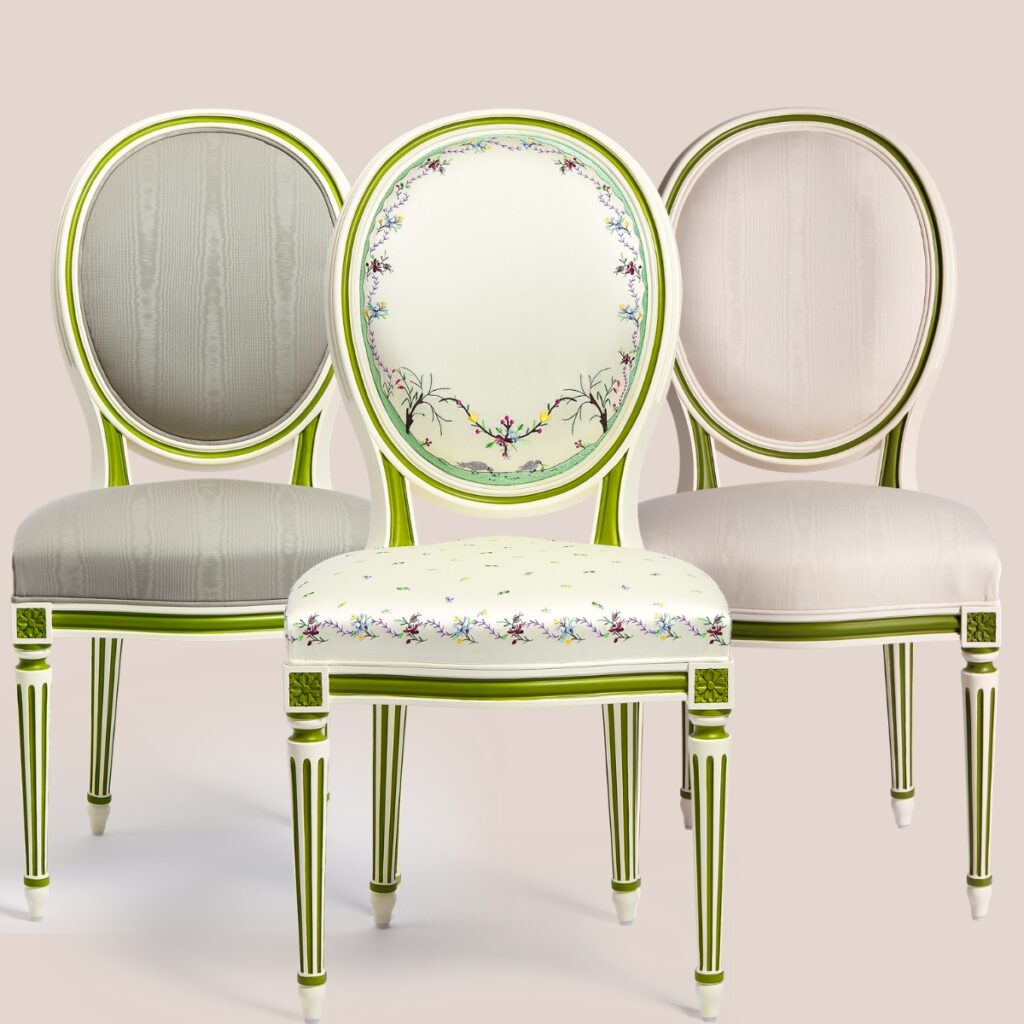
The moiré version is especially clever. Moiré has that rippling, watered surface that looks almost alive, like silk remembering movement. On a chair, it brings fashion’s textile intelligence into the domestic world. The embroidered romantic flower version, meanwhile, connects directly to Dior’s old love affair with gardens, flowers, and controlled romance.
Anderson is not reinventing the chair by making it unrecognisable. He is doing something more interesting. He is letting the chair remain itself, while changing the temperature around it.
Why Jonathan Anderson Is Turning The Medallion Into A Fashion Code
The most interesting part of this Dior moment is not only the chair itself. It is the way Anderson is moving the medallion shape into fashion and accessories.
In March 2026, Dior unveiled a Médaillon capsule by Jonathan Anderson, with accessories inspired by the Louis XVI-style chair that furnished the first Dior boutique. Numéro reported that the motif appeared across belts, bags, caps, wallets, scarves, sandals, loafers, rings, silk squares, and small bag charms.
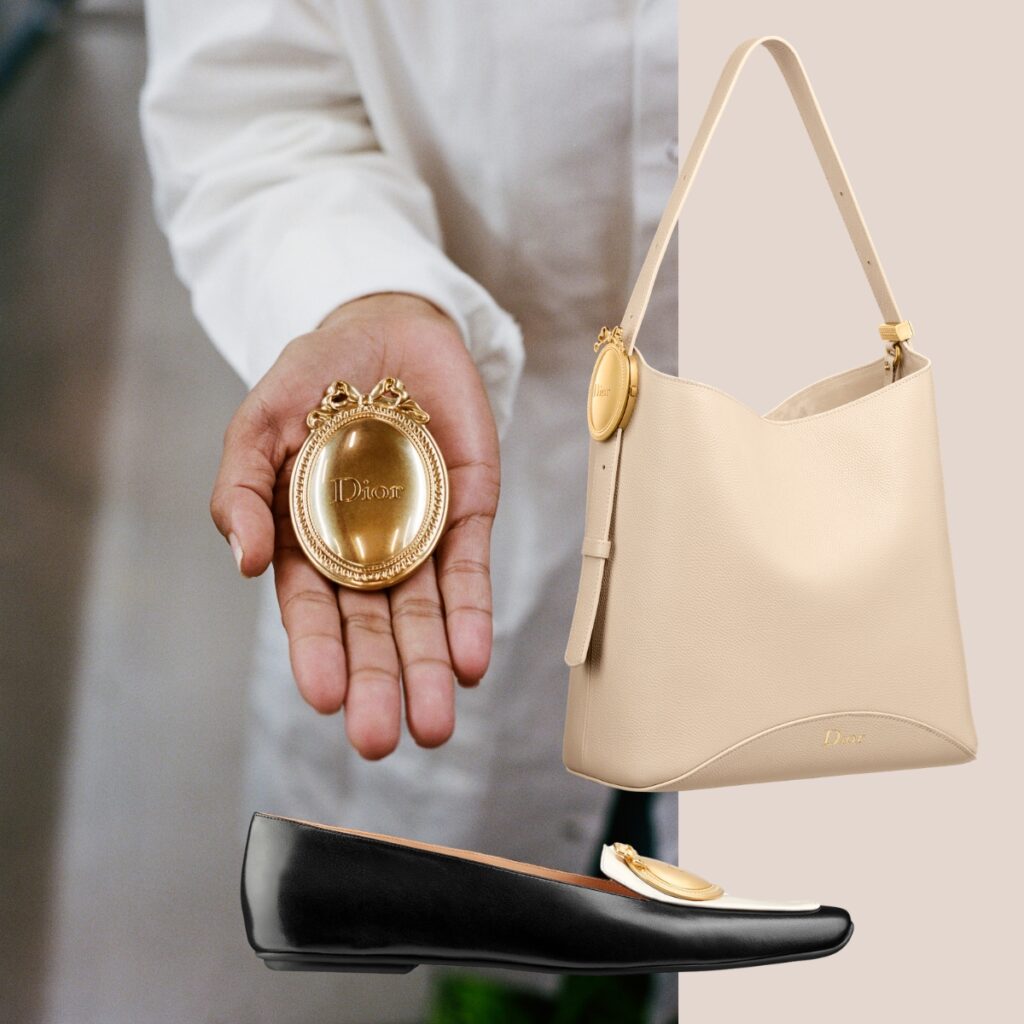
Médallion collection by Jonathan Anderson
This is where the story becomes more than interiors. The medallion is becoming a portable symbol. A chair back becomes a belt buckle. A salon object becomes a bag detail. A piece of furniture becomes a code you can wear.
It is a smart move because Dior already has powerful symbols: the Bar jacket, the Cannage pattern, the Lady Dior, Toile de Jouy, the bee, the star, and the bow. But the Medallion Chair carries something slightly different. It suggests posture and manners. It suggests the luxury of sitting still in a culture that keeps asking us to perform.
And perhaps that is why it feels fresh. Not because the medallion is new, but because stillness has become rare.
Dior’s New Era Is About Codes, Not Costumes
Jonathan Anderson was appointed Dior’s sole creative director in 2025, overseeing men’s, women’s, and couture collections — a major shift for the house. Since then, his Dior has appeared interested in reprogramming heritage rather than merely polishing it.
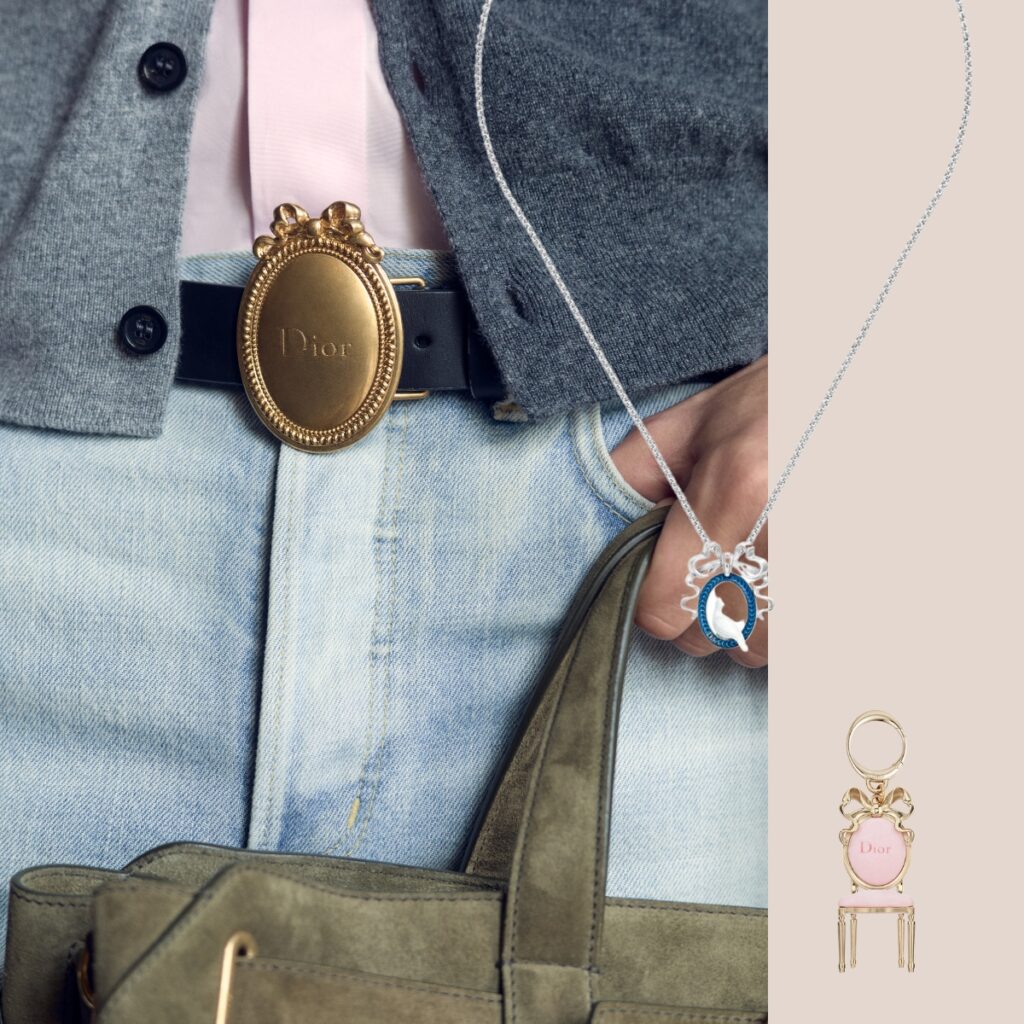
Médallion collection by Jonathan Anderson
On Dior’s Summer 2026 page, the house described Anderson’s vision as a way of “decoding” the language of Dior and reinventing it, with references to history, opulence, Chardin, the Bar jacket, eighteenth- and nineteenth-century clothing, roses, charms, and archival dresses.
That explains why the Medallion Chair matters. It is not just another archive reference. It is a symbol of how Dior wants to behave now: cultured, intimate, historical, but not frozen.
Fashion loves a loud comeback. Anderson seems more interested in a quiet return. The chair does not walk down the runway, but it tells you how to sit in the room.
Why The Dior Medallion Chair Feels So Modern
We are living through a moment when luxury is trying to prove itself again. Logos no longer do all the work. “Quiet luxury” has been overused to the point of exhaustion. Craftsmanship is often turned into a marketing paragraph. Heritage can sound like a very expensive lullaby.
The Dior Medallion Chair cuts through that because it is not trying to be trendy. It is too old for that. It carries memory, but it also gives Anderson a shape flexible enough to become a new house emblem.
And there is something almost rebellious in making a chair desirable in an age obsessed with movement. A chair asks you to stop and look. To hold your body differently. To remember that elegance is not always what you wear, but how you occupy space.
The red carpet gives us spectacle. The Medallion Chair gives us posture. At this precise moment, the chair may be the more radical object.
| What is the Dior Medallion Chair? | The Dior Medallion Chair is an oval-backed chair inspired by the Louis XVI style and closely associated with Christian Dior’s interiors, salons, and early boutiques. It became one of the maison’s discreet visual symbols. |
| Why is the Medallion Chair important to Dior? | The chair represents Dior’s idea of luxury as a complete world, not only fashion. It connects couture, interiors, craftsmanship, French decorative history, and the atmosphere of 30 Avenue Montaigne. |
| How has Jonathan Anderson reinterpreted the Dior Medallion Chair? | Jonathan Anderson has revisited the Medallion Chair through new Dior Maison designs, including versions with moiré fabric and embroidery featuring the Romantic Flower motif. He has also brought the medallion shape into Dior fashion and accessories. |
| Why is Dior using the medallion motif on accessories? | The medallion motif gives Dior a historic but fresh house code. By using it on belts, bags, shoes, jewellery, and other accessories, Jonathan Anderson turns a piece of Dior interior history into a wearable symbol. |
photo © Jean-Marie Binet, Courtesy Dior