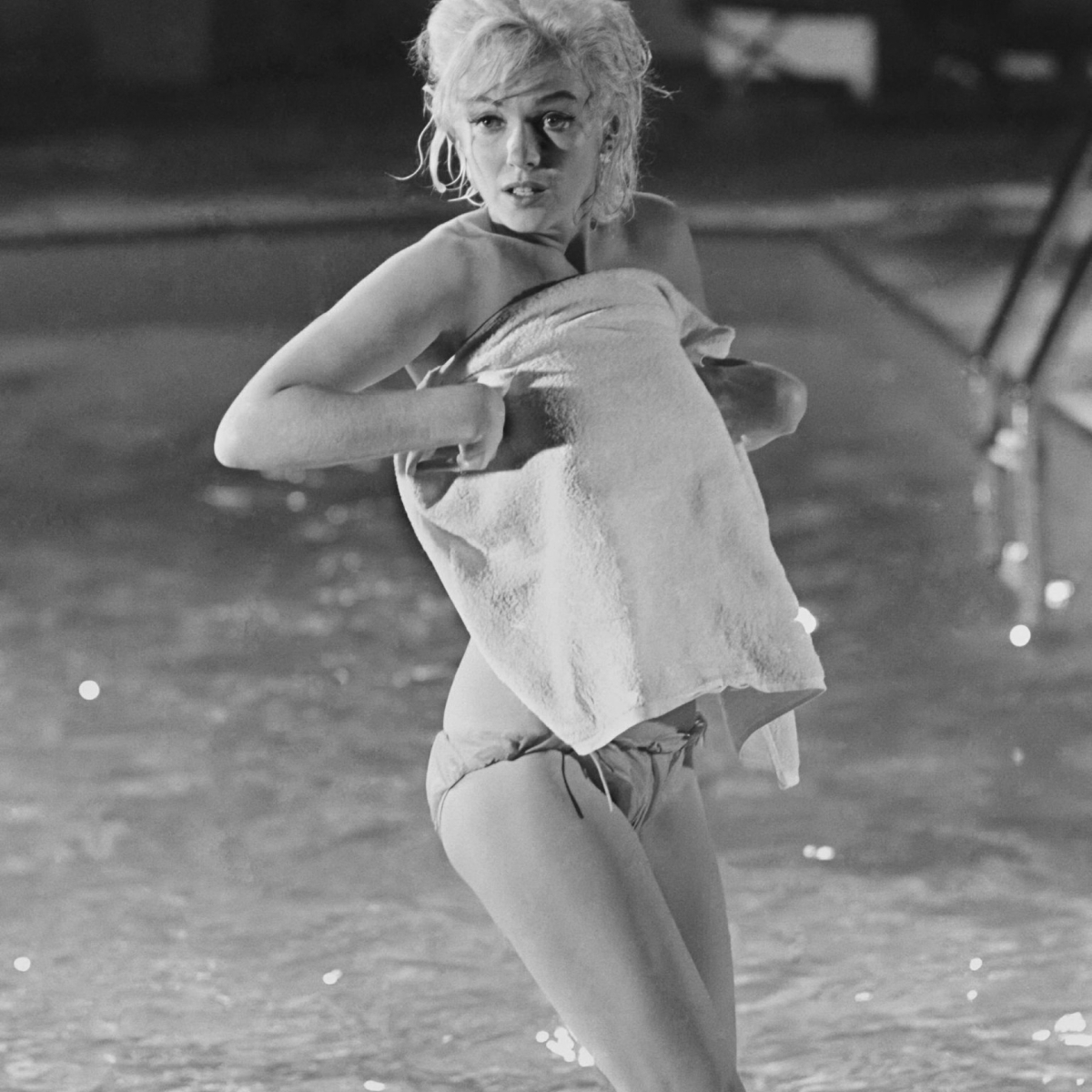
On 1 June 2026, Marilyn Monroe would have turned 100. A neat, round number for a woman who was never allowed to be neat or round in meaning. She had to be soft and sharp, innocent and erotic, available and untouchable, silly enough not to frighten men and clever enough to make the whole machine work.
Marilyn is often remembered as the ultimate blonde bombshell: the white dress over the subway grate, the breathy voice, the diamonds, the smile that seemed to arrive wrapped in satin. But behind the image was a more uncomfortable story. She understood very early that female intelligence, if shown too directly, could become a liability.
So she did something both tragic and strategic. She performed stupidity so well that the world mistook it for biography.
Marilyn Monroe And The Safety Of Playing Dumb
The film industry did not invent the fear of clever women, but Hollywood gave it lighting, costume and close-up. In the 1950s, the ideal woman on screen could be desirable, funny, decorative, even powerful in a velvet-gloved way. But she could not appear too intellectually sovereign. A brilliant woman had to soften the edges of her mind. She had to giggle before she spoke. She had to make intelligence look like an accident.
Marilyn Monroe became the high priestess of this strange ritual.
In Gentlemen Prefer Blondes, How to Marry a Millionaire and The Seven Year Itch, she played women who seemed deliciously uncomplicated. They wanted love, money, admiration, dresses, and safety. They entered rooms like dessert trolleys: sweet, irresistible, and not expected to discuss geopolitics.
Yet watch carefully, and the joke begins to turn. Marilyn’s characters were rarely as stupid as the men around them believed. They understood desire as economy, beauty as currency, and male vanity as a door with a very fragile lock.
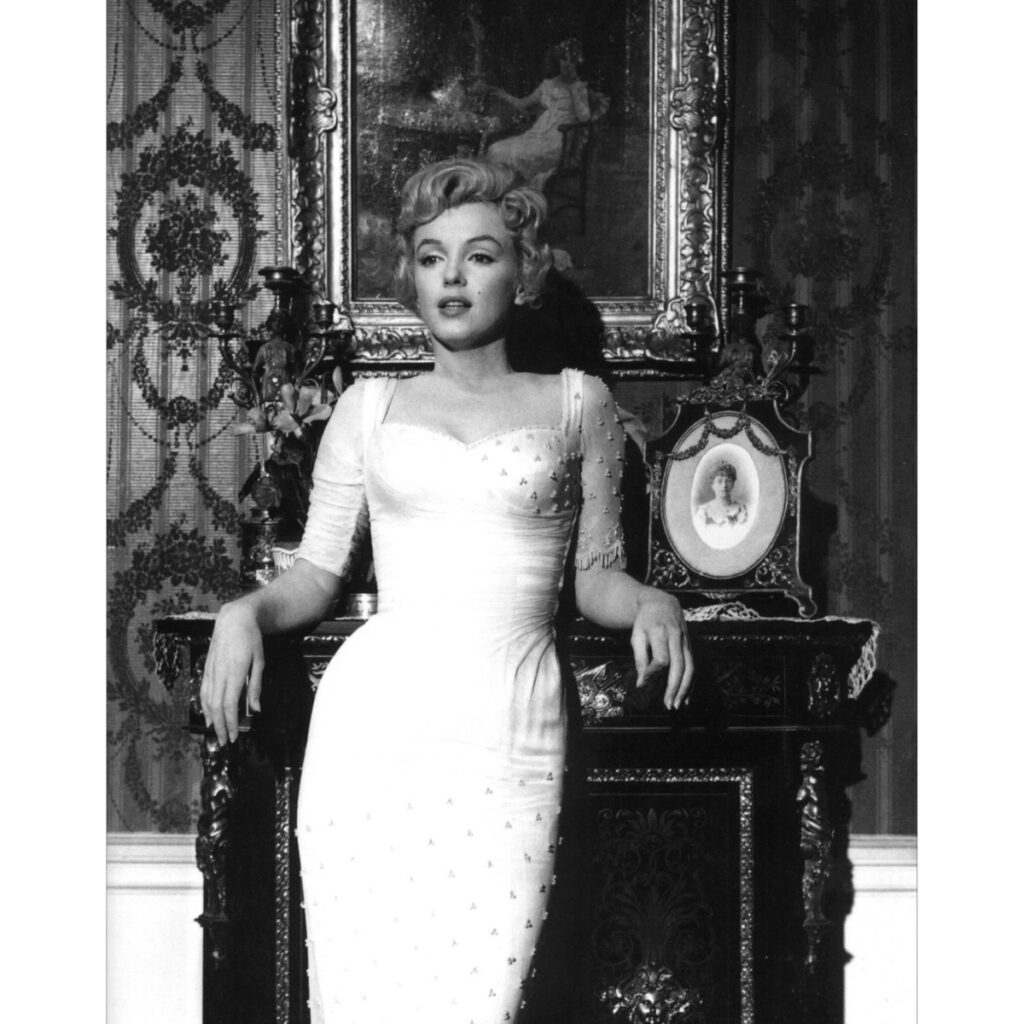
Marilyn in The Prince and The Showgirl
That was the genius of Marilyn’s performance. She made the “dumb blonde” archetype sparkle so brightly that people forgot to question who needed her to be dumb in the first place.
The Seducer And The System
Marilyn’s image was exploited by the film industry. That much is clear. The studio system knew exactly what it had found: a woman whose face could sell tickets, magazines, perfume, fantasies and a very specific idea of American femininity. She was packaged as seduction with a childlike bow on top, a contradiction so profitable that Hollywood never really stopped manufacturing it.
But the more interesting, and less comfortable, truth is that Marilyn also used the image herself.
This does not make her guilty. It makes her intelligent.
She understood the rules of the room she was in. If the door opens only when you arrive as fantasy, you may decide to enter as fantasy and then rearrange the furniture. Marilyn leaned into the role, refined it, exaggerated it, made it musical. Her walk, her pauses, her tiny delays before answering a line — all of it was choreography. She was not simply photographed by the male gaze. She learned its grammar and occasionally wrote better sentences with it.
Still, knowing how to survive a system is not the same as being free from it.
That is the part we must resist polishing too much. Marilyn was not merely a clever woman playing with her own image. She was also a woman slowly consumed by it. The persona protected her, fed her, made her famous and gave her a kind of power. Then it became bigger than the person who had created it.
Like a beautiful dress that first flatters the body and then tightens until breathing becomes difficult.
The tragedy of Marilyn is not that she was beautiful. Beauty is not the villain; vulgarity is. The tragedy is that her beauty became a public utility. Everyone felt entitled to switch it on. Studios, photographers, journalists, husbands, fans, strangers — all seemed to believe that Marilyn existed partly for them. Her body became architecture. Her vulnerability became décor.
And here is where her 100th birthday stops being nostalgia and starts feeling uncomfortably contemporary.
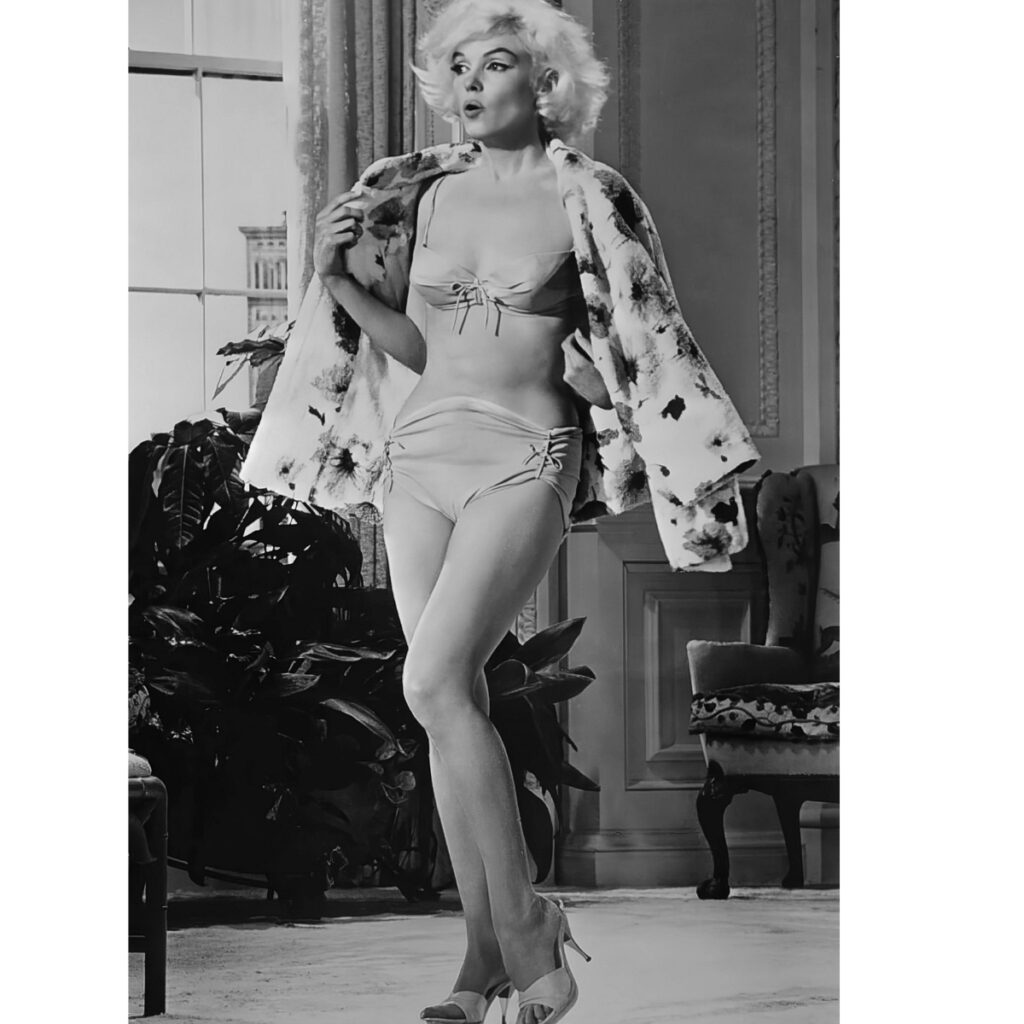
Marilyn at Something’s Got To Give.
From Hollywood Close-Up To The Transparent Society
Today, we like to think we are more sophisticated than old Hollywood. We have better language, better lighting and allegedly better moisturiser. We talk about agency, empowerment and personal branding. Women are no longer waiting for a studio executive to decide whether they are marketable. They can publish themselves, sell themselves, film themselves, monetise themselves.
Progress, yes. Also, not entirely.
Because the old studio system has not disappeared. It has been miniaturised and placed inside the phone.
The camera is no longer across the room. It is in the hand. The director is no longer a man in a suit. It is the algorithm, wearing the invisible perfume of neutrality. And the contract is no longer signed in an office. It is accepted every time a woman learns that more skin, more intimacy, more confession, more access, more “realness” often means more reach.
We live in a transparent society, where privacy has become the last luxury item. The successful video often begins not with an idea, but with a body. A girl stands in her underwear before putting on clothes, and the transformation becomes content. The private room becomes the opening scene. The mirror becomes a stage. Getting dressed, once a small daily act between a woman and her wardrobe, becomes a public performance with metrics.
Of course, not every woman doing this is a victim. Many are smart, strategic, funny, entrepreneurial. Like Marilyn, they understand the grammar of the gaze. They know the platform. They know what stops the scroll. They know that attention is the new studio contract, and attention rarely arrives carrying flowers and a moral philosophy.
But we should be honest about the cost.
When visibility becomes currency, intimacy becomes labour. When authenticity becomes a performance, the self becomes a showroom. And when the body is the fastest route to being seen, women are once again asked to prove they are harmless before they are heard.
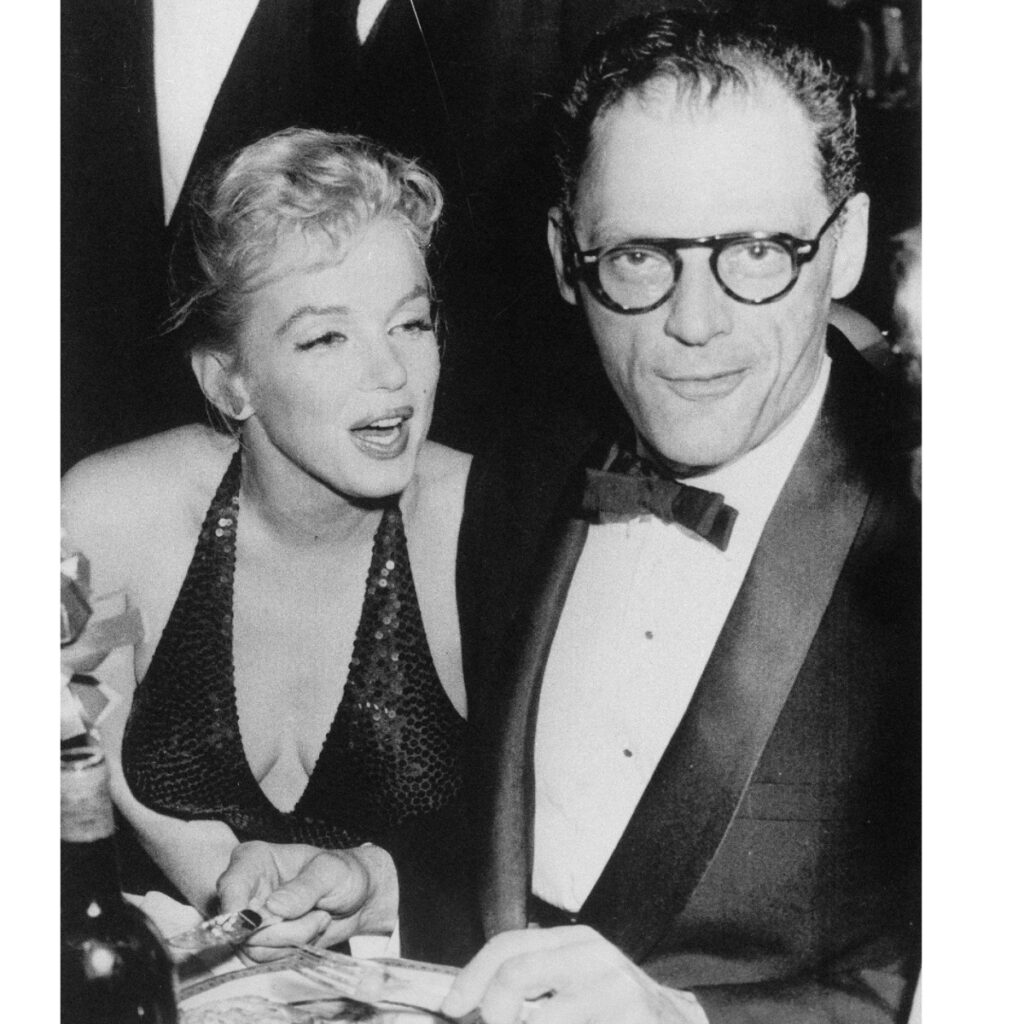
Marilyn Monroe and Arthur Miller at the Paris Ball, 1957
The New Dumb Blonde Is Not Blonde
The modern version of the “dumb blonde” is not necessarily blonde, and she is not necessarily dumb. She may have a law degree, a skincare line, a podcast, a spreadsheet with affiliate links and better business instincts than most men in suits. But she may still have to package herself in a way that feels available, amusing, decorative or emotionally accessible enough to be consumed.
The old script said: be sexy, but not threatening.
The new script says: be empowered, but keep sharing.
Share your outfit. Share your morning. Share your heartbreak. Share your bathroom shelf. Share your body before the outfit. Share the soft underbelly of your life, preferably with good lighting and a trending sound.
We used to call this exposure. Now we call it content.
Marilyn understood exposure before it had a ring light. She knew that being seen could be a staircase and a cage at the same time. Her genius was to turn the cage into a stage. Her wound was that the stage never closed.
Marilyn’s Real Legacy
The most insulting way to remember Marilyn Monroe is to reduce her to glamour. The second most insulting way is to remove the tragedy from her life because it makes us uncomfortable. Her story was tragic. Not because she was weak, silly or doomed by beauty, but because she negotiated with a world that kept raising the price.
She was both victim and strategist. That contradiction is the heart of her modernity.
Marilyn created a persona to survive the industry, and that persona helped her become one of the most recognisable women of the 20th century. But the same creature she invented began to eat her alive — with lipstick on its teeth. It demanded more softness, more seduction, more availability, more sparkle. It rewarded her for becoming an image, then punished her for being a human being behind it.
This is the Marilyn worth remembering at 100: the woman who negotiated, inch by inch, how much of her femininity and dignity she could offer to the public in exchange for love.
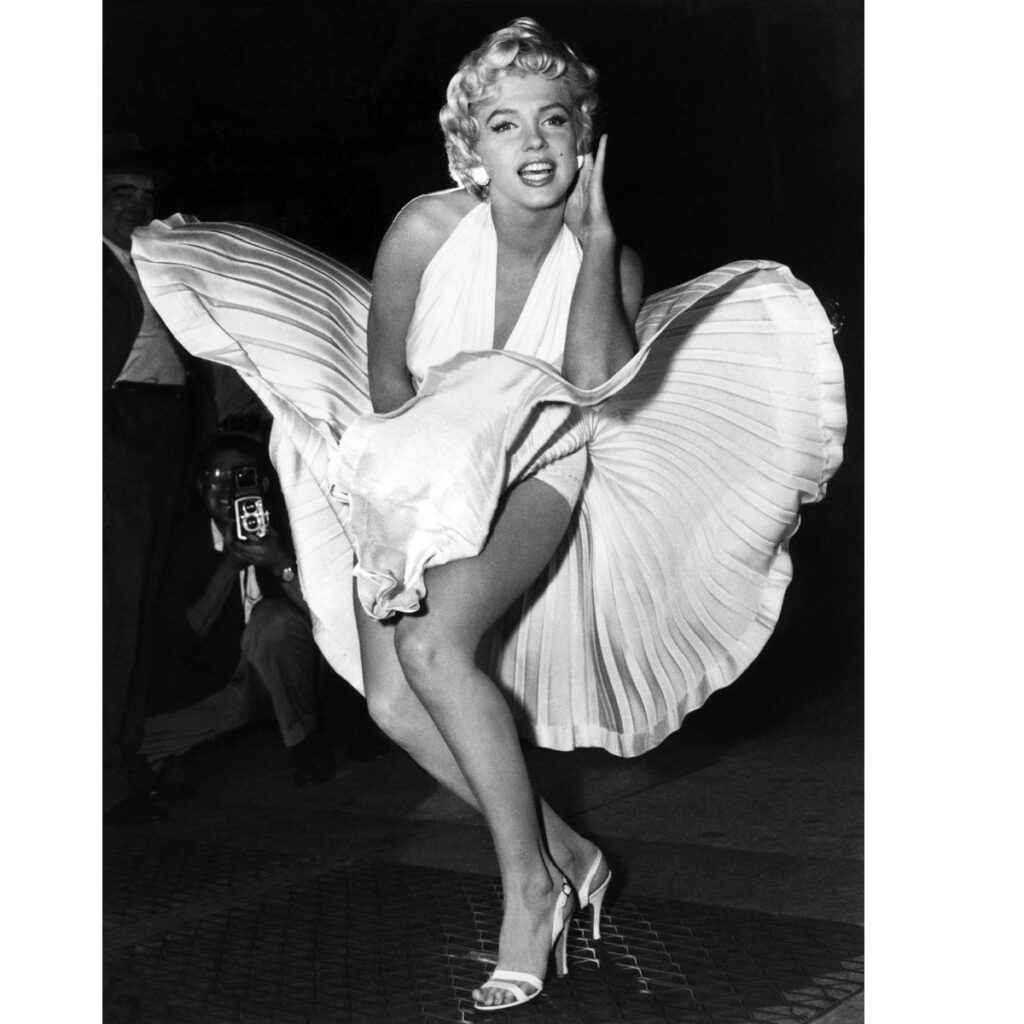
Marilyn Monroe, while filming The Seven Year Itch on the streets of New York
And that negotiation was never truly fair. Marilyn was smart, ambitious and aware of the game. But awareness does not make the game harmless. Strategy does not erase exploitation. Sometimes it only makes exploitation look like choice.
Her life asks a question that still feels painfully fresh: how much of herself must a woman reveal before she is allowed to exist publicly?
Today, the studio system has moved into the phone. The public no longer waits outside the cinema; it scrolls in bed, half-awake, hungry for intimacy. A girl begins a video in her underwear before getting dressed, and the algorithm applauds before the outfit even appears. The private room becomes the opening scene. The body becomes the introduction. The woman must offer access before she offers an idea.
Of course, this does not mean every woman who performs visibility is naïve or powerless. Many are smart, strategic and entrepreneurial. Marilyn was too. But strategy does not erase exploitation. Sometimes it only teaches exploitation to speak the language of freedom.
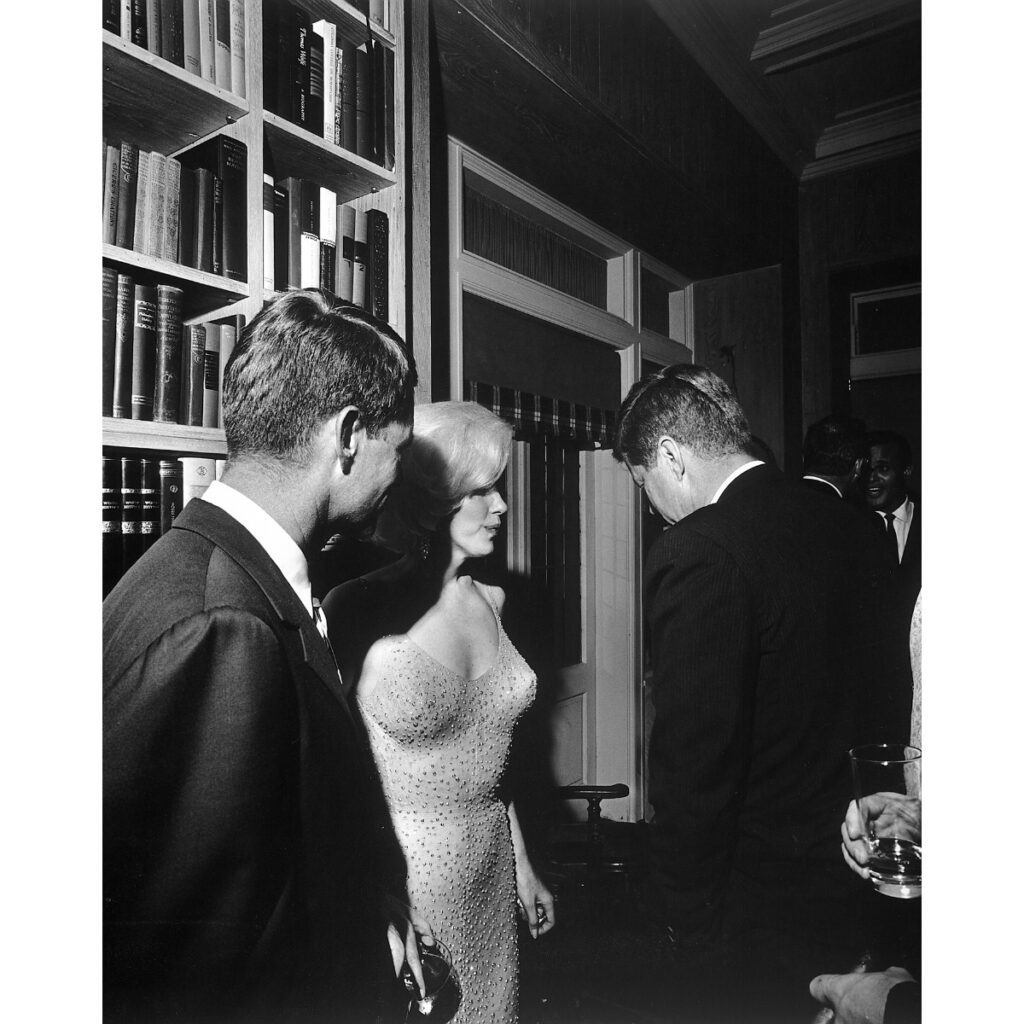
U.S. President John F. Kennedy (with his back to the camera), U.S. Attorney General Robert Kennedy (far left), and actress Marilyn Monroe, on the occasion of President Kennedy’s 45th birthday celebrations at Madison Square Garden in New York City.
That is why Marilyn is still remembered through the tragic part of her life: because it was tragic. Not in a melodramatic, violins-in-the-background way, but in the quiet human sense of someone who was loved by millions and still not protected by that love. The fans adored the image. The industry profited from the image. The world kept asking for more of the image. But somewhere behind the blonde hair, the satin dresses and the breathy jokes, there was a woman trying to keep a small room inside herself untouched.
A century later, we are still asking women to perform some version of that bargain. Be desirable, but not demanding. Be exposed, but call it empowerment. Be intimate, but stay marketable. Be clever, but not so clever that the fantasy collapses.
Marilyn did not fail because she was weak. She suffered because the price of being adored was too high. And perhaps that is the most modern thing about her. She understood that femininity could be a language, a costume, a weapon, a shelter and a trap.
She played the dumb blonde because it was the safest room available.
The tragedy is that even that room had no lock.
All images from commons.wikimedia.org